As an Amazon Associate this site earns from qualifying purchases.
If you want to know how to stop cyanobacteria in low flow corner of planted 75 gallon tanks, the fastest reliable fix is a three-step combination: add a small auxiliary powerhead or wavemaker aimed at the dead zone to raise flow above 10x turnover at the corner, perform a 3-4 day total blackout while dosing an oxygenator, then correct the underlying nutrient imbalance (usually low nitrate, excess organics, or trapped detritus) so the slime film never returns. Cyanobacteria (often called blue-green algae, though it's actually a photosynthetic bacterium) thrives in stagnant, low-oxygen pockets where mulm settles and CO2/nutrient gradients stall. In a 75 gallon planted tank, the back corners opposite your filter outflow are the textbook hotspots. Below is the full diagnostic and treatment playbook for 2026, plus the gear that actually fixes the root cause rather than masking it.
Why Cyanobacteria Targets the Low-Flow Corner First
Cyanobacteria isn't algae in the traditional sense - it's a prokaryotic bacterium that can fix its own nitrogen, which means it actually thrives when your water column nitrate is too low and dissolved organics are high. The back corner of a standard 48" x 18" x 21" 75 gallon tank is hydraulically the worst spot in the aquarium. If your canister or HOB outflow sits on one end, the diagonally opposite corner can have flow rates below 2 cm/s - effectively dead water. Detritus settles there, gas exchange stalls, and a biofilm of heterotrophic bacteria forms on the substrate. Cyanobacteria colonizes that biofilm within days, appearing first as a blue-green or dark red slime sheet on the sand, then climbing up plant leaves and hardscape.
The corner-specific symptoms you should look for:
- A peelable, slimy sheet (not stringy like hair algae or fuzzy like BBA)
- Strong earthy or swampy smell when disturbed
- Trapped oxygen bubbles under the mat by mid-afternoon
- Plants in that corner showing stunted growth or yellowing lower leaves
- Substrate visibly darker or blacker just under the slime layer (anaerobic pocket forming)

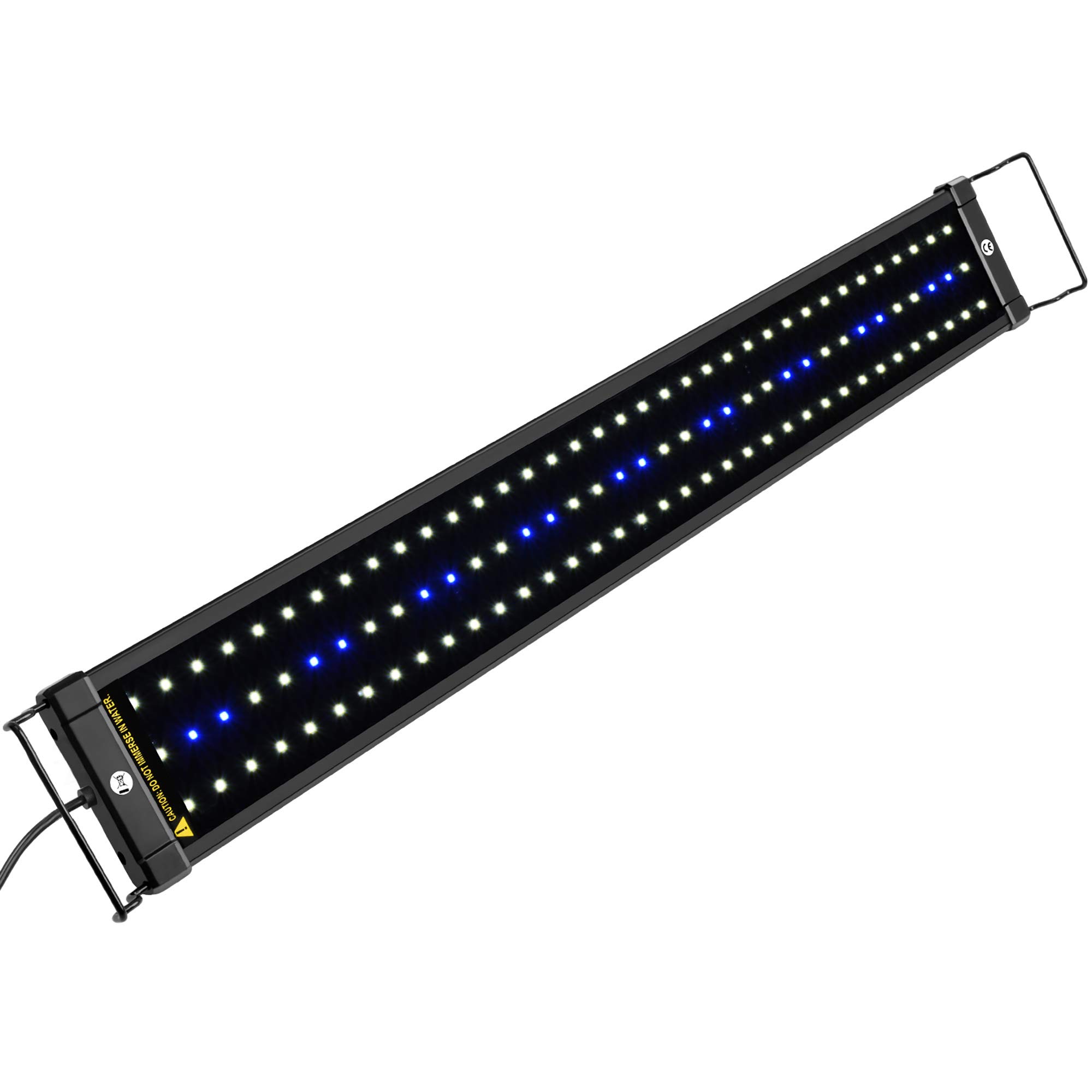
- HIGH QUALITY AQUARIUM LIGHT: Built in widened and thickened aluminum gloss shell is more beautiful and durable. Wider surface makes the heat dissipation effect of the light
- DIY MODE: You could DIY modes as you like, there have switch that on/off button & change the light color or enter the color cycle & brightness & timer setting. 9 light colors

- Orlushy aquarium heaters come in six different sizes, suitable for small fish tanks, aquariums and turtle tanks. Please choose the right wattage aquarium heater according to our
- Stable Heating: Stair shape heating that red light is on and heater starts to intermittently heat the water to the set temp, saving energy and electricity. When green light is on

- 【Rapid Heating and Two Temperature Control System】50W aquarium heater is sutable for 5-10 gallon fish tank and made of the most stable nickel-chromium heating wire, which can
- 【Intelligent Water Sensor and Over Temperature Protection】This fish tank heater has a unique intelligent temperature and water sensor system, the heater will automatically stop
Step 1: Fix the Flow Before Anything Else
Every treatment fails if you skip this step. You cannot chemically out-dose a circulation problem. The goal in a planted 75 gallon is roughly 8-10x tank turnover at the surface, but more importantly, no measurable dead zones at substrate level. The simplest diagnostic is the "flake test": drop a pinch of food at each corner and watch how long it takes to move. If it sits more than 5 seconds in your problem corner, that corner is your incubator.
Solutions, in order of cost and effectiveness:
- Reposition existing outflow. Angle the spray bar or lily pipe so its current sweeps along the back glass toward the dead corner, not straight across the front.
- Add a small circulation pump. A 500-800 GPH nano powerhead mounted on the opposite wall, aimed low and across the substrate, eliminates 90% of corner cyano cases without any chemicals.
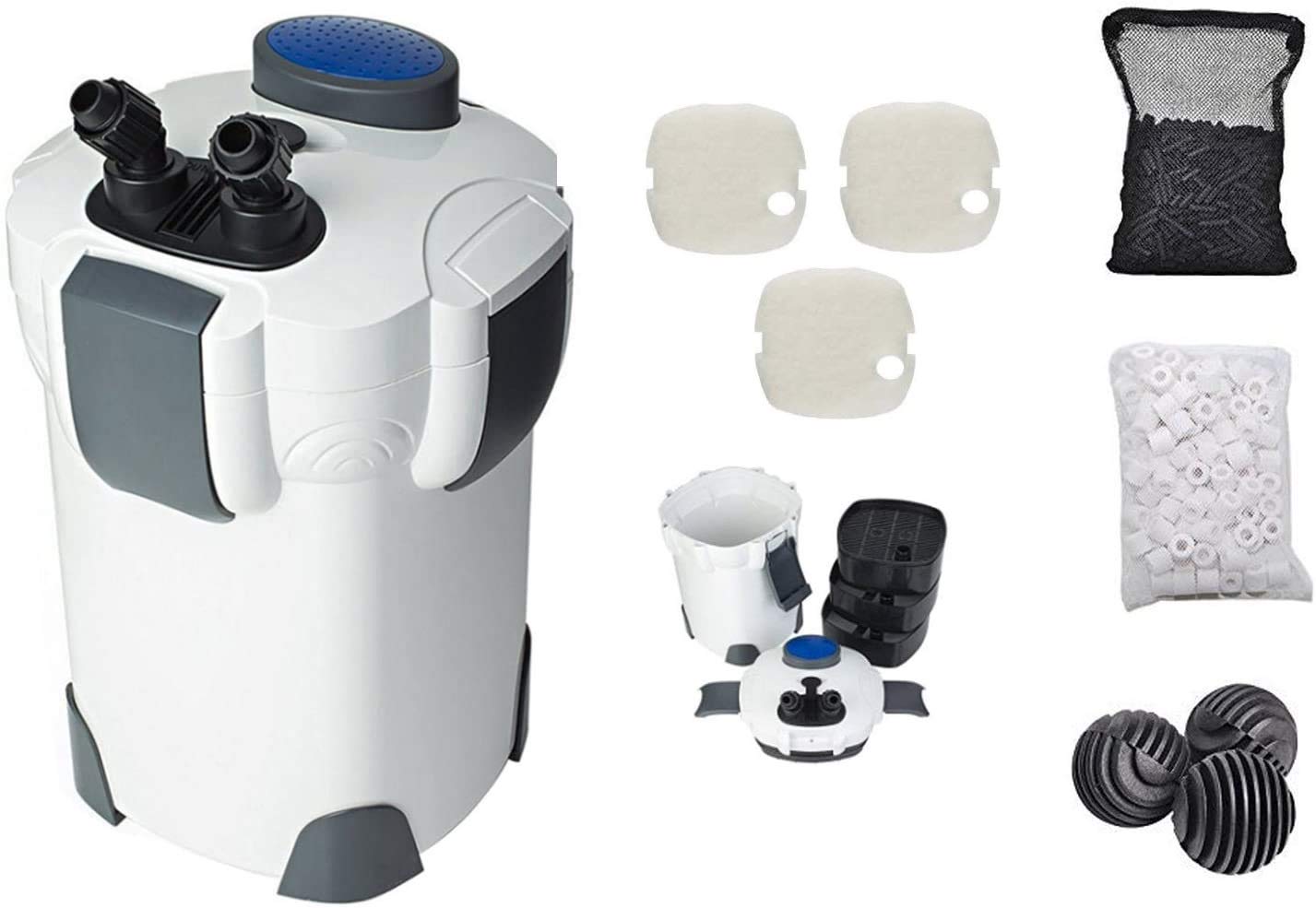
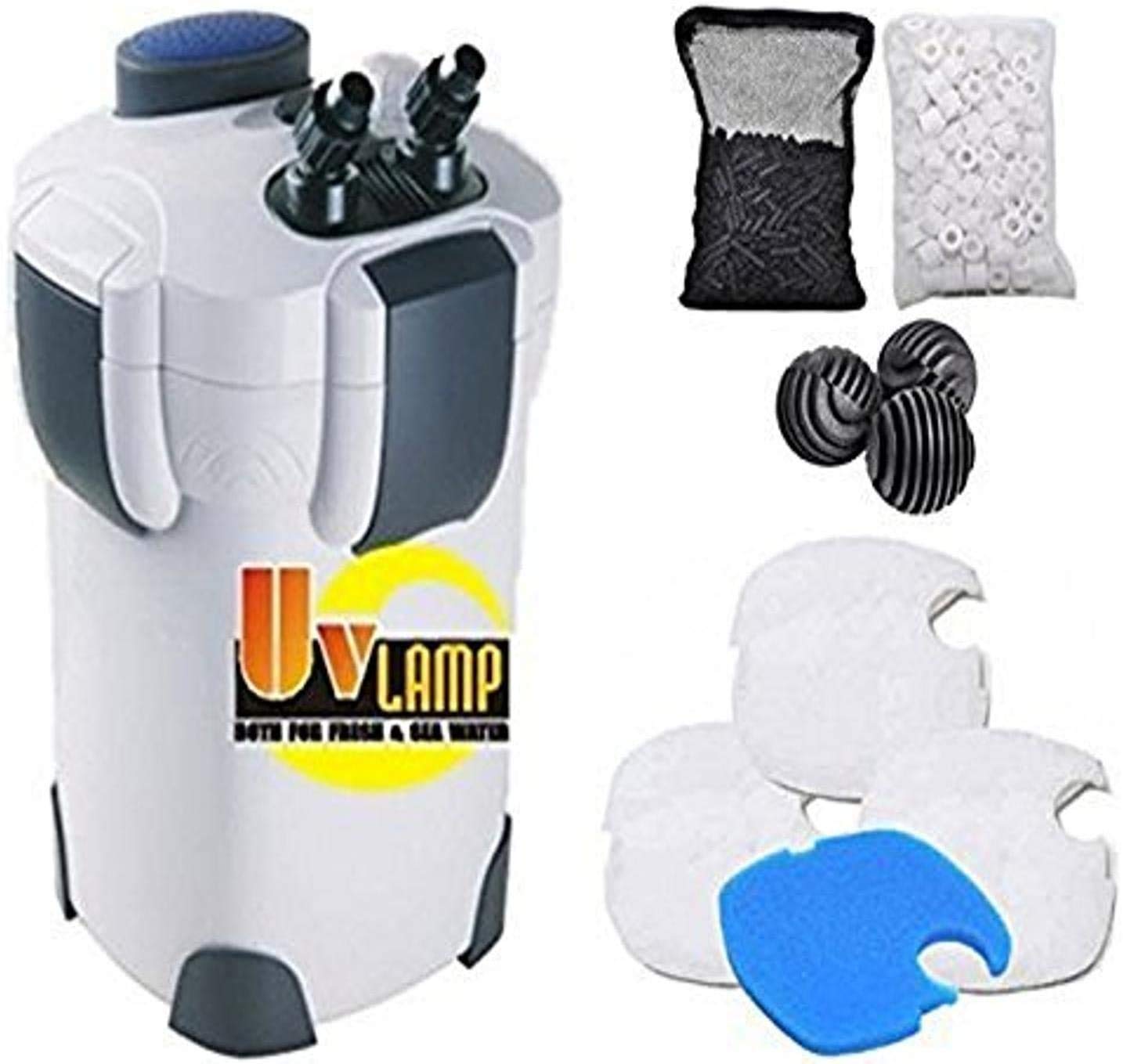
- Upgrade undersized filtration. If your canister is rated for a 55 gallon and you're running a 75 with heavy plants and hardscape, the entire tank is undercirculated.
For sizing decisions on the filter itself, our heavily planted 75 gallon canister filter guide walks through GPH-to-volume math for densely scaped tanks and which models actually deliver their rated flow under a full media load.
Step 2: The 3-4 Day Blackout (Done Correctly)
A blackout is the single most effective non-chemical knockdown for cyanobacteria because, unlike most plants, cyano cannot survive prolonged darkness while still respiring at high rates. Plants drop into low-metabolism mode; cyano starves. Done correctly, you can wipe out a corner outbreak in 72-96 hours.
The protocol:
- Do a deep gravel vac of the affected corner first - remove as much slime mat as possible by hand and siphon.
- Perform a 40-50% water change with temperature-matched, dechlorinated water.
- Turn off CO2 (plants aren't photosynthesizing in the dark, and CO2 will plummet pH unsafely).
- Keep filters and circulation running 24/7. Increase surface agitation for oxygen.
- Wrap the tank in dark towels or trash bags - light leakage extends the cure time.
- Do not feed for the first 48 hours. Fish are fine; this reduces organic load.
- After 72-96 hours, uncover, do another 30% water change with substrate vacuum, and resume normal lighting at reduced photoperiod (6 hours for the first week).
The reason many hobbyists fail with blackouts: they skip the manual removal first, or they let one corner stay lit through ambient room light. Cyano in even a small lit patch will re-seed the whole tank within a week.
Step 3: Correct the Nutrient Imbalance
Counterintuitively, planted tanks with cyanobacteria outbreaks usually have too little nitrate, not too much. When NO3 drops below 5 ppm, plants slow nutrient uptake, dissolved organics accumulate, and cyano (which fixes its own nitrogen from the air) gains a competitive edge. Target ranges for a healthy planted 75 gallon:
- Nitrate: 10-20 ppm
- Phosphate: 0.5-2 ppm
- Potassium: 10-20 ppm
- CO2: 25-35 ppm during photoperiod
- Surface agitation: enough to ripple visibly, never glass-still
If you're dosing EI or PPS-Pro and still hitting cyano, the issue is almost always distribution - the back corner isn't seeing the dosed water column because of stagnation. Fixing flow (Step 1) makes your existing dosing schedule work properly.
For a broader walkthrough of nutrient testing and stable parameters, see our aquarium water quality maintenance guide.
When Chemical Treatment Is Justified
If you've fixed flow, run a proper blackout, corrected nutrients, and cyano still returns within two weeks, a targeted erythromycin-based treatment (commonly sold as Maracyn or generic equivalents) is the accepted next step. Erythromycin specifically disrupts cyanobacterial protein synthesis without harming most plants, fish, or shrimp at label doses. Critical caveats:
- It will partially crash your nitrifying biofilter - test ammonia daily for a week after treatment.
- Remove chemical media (carbon, Purigen) during dosing.
- Run an air stone or wavemaker for extra oxygen; antibiotics often reduce dissolved O2.
- Never use it as a first response - you'll mask the underlying flow/nutrient problem and the outbreak will return harder.
Gear That Actually Solves Corner Cyano in a Planted 75
You don't need a cabinet of additives. You need three things working together: directional flow, oxygen, and the ability to spot-treat the dead zone. Here are the categories worth investing in.
A Dedicated Circulation Pump for the Dead Corner
This is the single highest-ROI purchase for any 75 gallon with persistent corner cyano. Look for a compact wavemaker or nano powerhead in the 500-1000 GPH range with a magnet mount so you can angle it precisely across the substrate of the affected corner. Avoid oversizing - in a planted tank you want directional sweep, not a whirlpool that uproots foreground carpets. A controllable or pulse-mode pump lets you create gentle wave patterns that prevent any new dead zones from forming as the scape grows in.
An Upgraded Canister or a Second Filter
Many 75 gallon cyano cases trace back to a filter that's rated for the tank volume on paper but loses 30-40% of its flow once packed with biomedia. If your current canister is more than three years old or undersized, supplementing with a small HOB on the opposite end is often easier than a full upgrade. For tanks with heavy hardscape that breaks up flow, two smaller filters on opposing corners outperform one large unit. The 2026 best aquarium filters guide compares current options by realistic delivered flow rather than box-claimed GPH.
An Air Pump and Air Stone for Overnight Oxygenation
Cyanobacteria struggles in highly oxygenated water, and night-time O2 crashes in planted tanks (plants respiring, no photosynthesis) create the exact low-oxygen window where cyano expands. A quiet linear-piston or diaphragm pump running a long air bar across the back of the tank from lights-off to lights-on raises overnight dissolved oxygen significantly without disrupting your CO2 schedule. Our best aquarium air pumps for 2026 comparison covers models quiet enough to run in a living room.
A Lighting Schedule That Doesn't Feed the Problem
Over-lighting a 75 gallon - especially with a single high-output fixture creating intensity gradients across the tank - encourages cyano in the dim corners where plants are too weak to outcompete it. A properly sized, evenly distributed LED running 6-7 hours with a 1-hour ramp is the sweet spot for low-to-medium tech planted tanks. Our low-tech planted LED guide covers fixtures that distribute PAR evenly across the full 48-inch footprint instead of dumping intensity into the center.
Prevention: Keeping the Corner Clear Long-Term
Once you've cleared the outbreak, the maintenance routine that prevents recurrence is shorter than the treatment:
- Weekly: vacuum the problem corner specifically, even if it looks clean.
- Weekly: 30-40% water change with parameter-matched water.
- Monthly: rinse mechanical filter media in tank water and check for clogs reducing flow.
- Quarterly: rotate or reposition any decor that has shifted flow patterns as plants grow in.
- Maintain a stable photoperiod - erratic on/off cycles favor cyano.
- Keep nitrate measurable (10-20 ppm) at all times. A planted tank pulling nitrate to zero is a tank waiting for cyano.
The most overlooked prevention factor is plant mass. A heavily planted, fast-growing tank with stems like rotala, ludwigia, and hygrophila simply outcompetes cyano for nutrients. If your 75 is sparsely planted or dominated by slow-growers like anubias and crypts, the open substrate becomes prime real estate for slime mats. Adding even a single back corner of fast stems near the problem area dramatically reduces recurrence.
Frequently Asked Questions
How long does it take to clear cyanobacteria from a planted 75 gallon corner?
With proper flow correction plus a 72-96 hour blackout, visible slime is usually gone in 4-7 days. Full prevention of regrowth takes 3-4 weeks of consistent maintenance and nutrient stability. If you only address the visible symptom without fixing flow, expect regrowth within 10-14 days.
Will a UV sterilizer stop cyanobacteria in a low flow corner?
Only partially. A UV sterilizer kills cyanobacterial cells suspended in the water column passing through it, but the slime mat in your dead corner is anchored to the substrate and biofilm - the UV unit never sees those cells. UV is a useful supplement after you've fixed flow and removed the mat, but it cannot reach the source of a corner outbreak on its own.
Can I use hydrogen peroxide spot treatment for cyanobacteria on plants?
Yes, 3% pharmacy-grade hydrogen peroxide spot-dosed at roughly 1 ml per gallon, applied directly to the cyano mat with the filters off for 15 minutes, can knock back stubborn patches. Restart filters after. It's a useful supplement to the blackout method but should not be used as a recurring treatment - chronic peroxide dosing stresses sensitive plants and shrimp.
Does cyanobacteria mean my planted tank has too much light?
Not necessarily. Cyano correlates more strongly with low flow, low nitrate, and high organics than with raw light intensity. However, excessive photoperiod (over 8 hours) or fixtures that create dim shadow zones in corners while overdriving the center can absolutely contribute. Even out your PAR and shorten the photoperiod before assuming you need to dim the whole tank.
Should I remove fish or shrimp during a cyanobacteria blackout?
No. A 3-4 day blackout with filters running, no feeding for the first 48 hours, and good surface agitation is completely safe for healthy fish and shrimp. Removing them creates more stress than the blackout itself. Just resist the urge to peek - opening the cover and letting light in resets the cure clock.
Why does cyanobacteria keep coming back in the same corner after treatment?
Because you haven't fixed the underlying hydraulic dead zone. Cyano spores and cells survive in trace amounts throughout the tank; they only colonize where flow, oxygen, and organic accumulation favor them. The same corner keeps recurring because the same flow pattern keeps creating the same conditions. Add a circulation pump aimed at that specific area and the recurrence usually stops.
Is cyanobacteria in a planted tank dangerous to fish or shrimp?
Mild outbreaks rarely harm livestock directly, but severe mats can produce cyanotoxins, deplete oxygen overnight, and smother plant leaves and substrate-dwelling invertebrates. Shrimp are noticeably more sensitive than fish. Treat any visible outbreak promptly rather than letting it spread - small corner patches are far easier to clear than a tank-wide bloom.