As an Amazon Associate this site earns from qualifying purchases.
The best LED light for low tech planted tank under 150 dollars delivers a balanced full-spectrum output between 30-50 PAR at substrate, includes a built-in or compatible timer, and covers the full footprint of a standard 20-75 gallon aquarium without forcing CO2 injection. For low tech setups running Anubias, Java fern, Cryptocoryne, Vallisneria, or Amazon swords, you want moderate PAR (not the blasting intensity of high tech reef-style fixtures), a Kelvin range between 6500K and 7500K, and dimming control so you can throttle output back if algae creeps in. Spending under $150 is entirely realistic in 2026, and you do not need to compromise on plant growth, color rendering, or build quality at this price point.
This guide walks through what actually matters when choosing a sub-$150 LED for a low tech planted tank, what specs to ignore, how to size a fixture to your tank, and the common mistakes that turn a perfectly good light into an algae factory. Whether you are setting up your first planted display or upgrading a stock hood, the best LED light for low tech planted tank under 150 dollars is the one matched to your plant load, tank depth, and maintenance style.
What Makes a Light "Low Tech Planted" Friendly?
Low tech planted tanks rely on nutrients from substrate and fish waste, occasional liquid fertilizer dosing, and ambient atmospheric CO2 rather than pressurized injection. This metabolic rate is slow compared to high tech tanks, which means plants cannot keep up with light energy delivered at full reef-style intensity. Too much light without matching CO2 and nutrients creates the perfect algae environment.
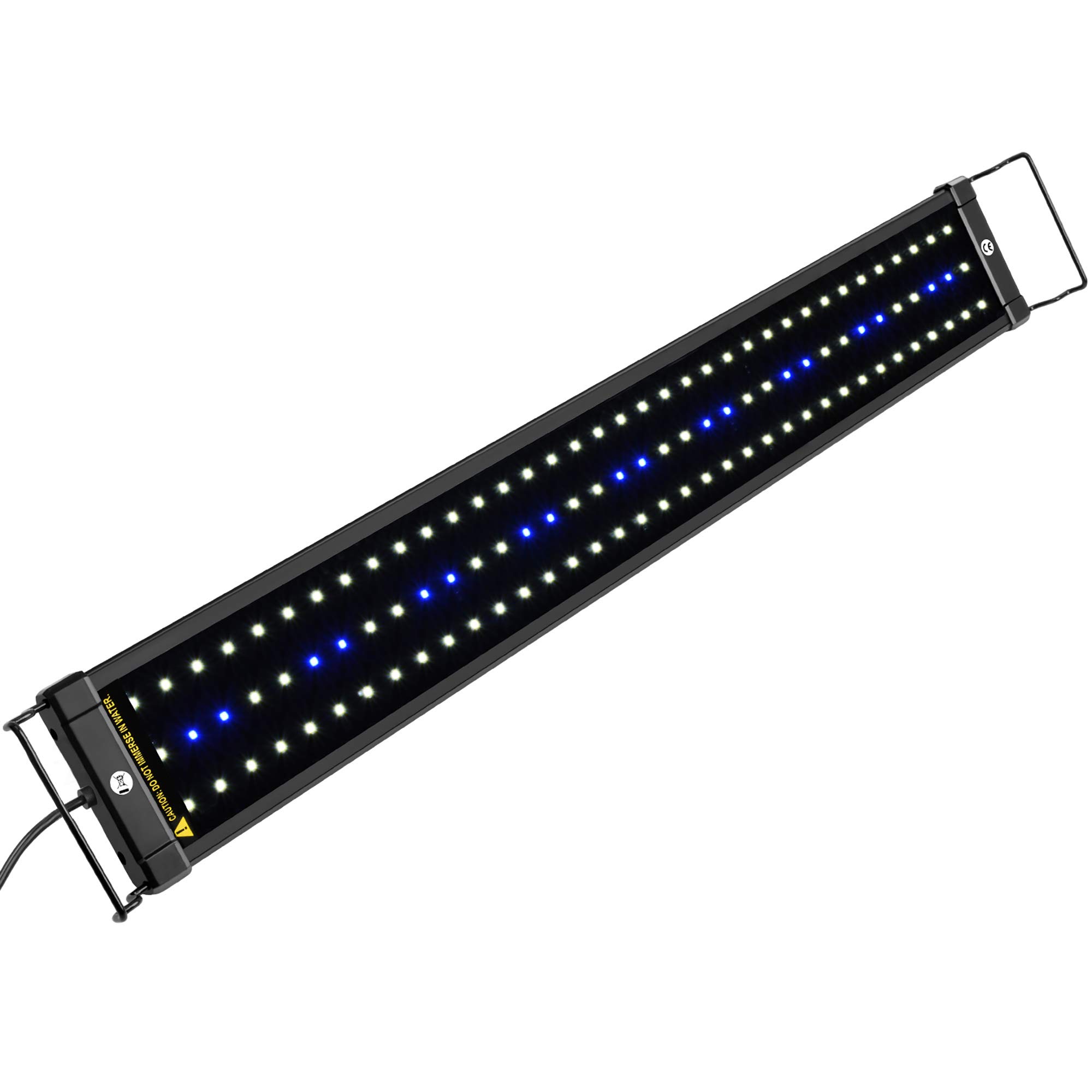
The sweet spot for low tech is roughly 20-40 PAR at substrate level for a typical 12-20 inch tall tank. Many budget fixtures advertise lumens, which is essentially meaningless for plant growth because lumens measure human-visible brightness, not photosynthetically active radiation. Look instead for stated PAR values, PUR-weighted output, or at minimum a full-spectrum diode mix that includes red and blue alongside white.
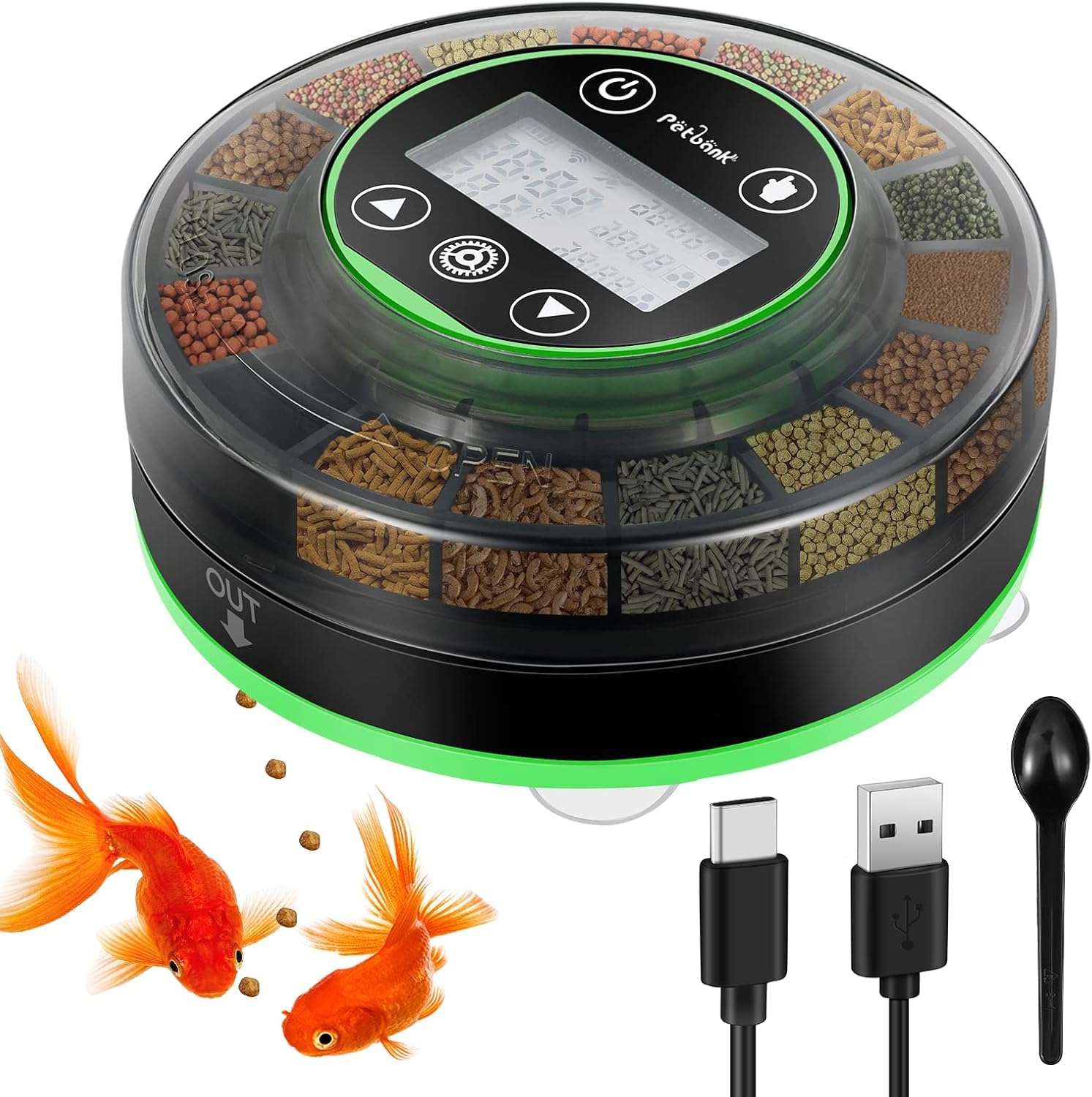
- Accurate Food Amount :Compared with ordinary fish feeders with only one compartment, Petbank updated automatic fish feeder contains 16 grids in total, which is able to provide 15
- 2 Setup Methods :Petbank aquarium feeder provides two different installation ways to fit different types of aquariums. You can either mount it to the tank by adjustable clamp
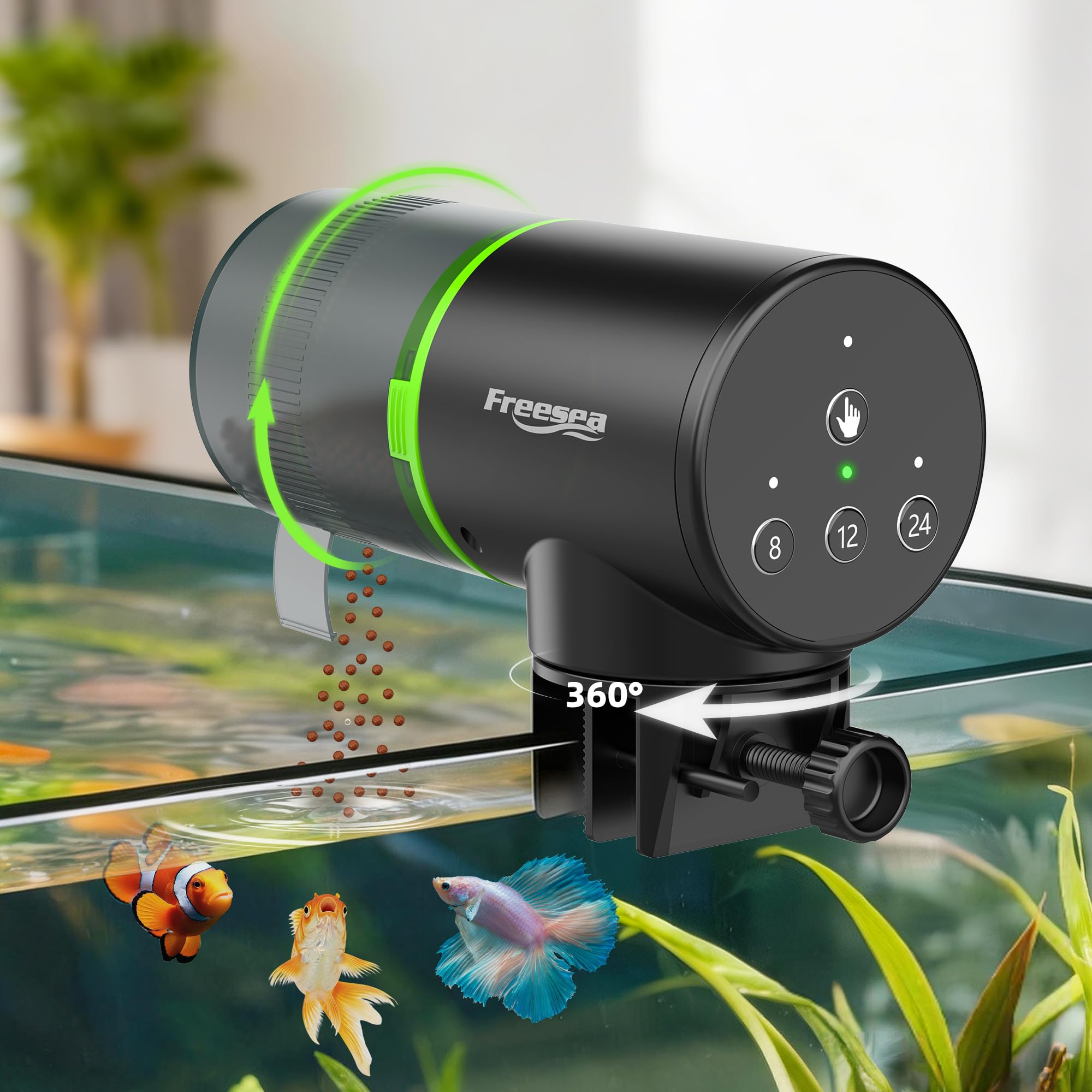
- Tailor-made for aquarium enthusiasts, this auto fish feeder eliminates vacation feeding worries for family travel, business trips, weekend getaways. It handles daily feeding for
- Unlike orthers feeders complex setup, inaccurate timers causing over or missed feeding, clogging, poor compatibility, our automatic fish feeder has 1s setup, precision feeding
Key Specs to Check Before You Buy
Before clicking buy on any fixture, run through these five checks:
- Coverage length: The fixture should match or extend slightly past your tank's interior length. A 36-inch fixture on a 48-inch tank leaves dark zones where plants struggle.
- Spectrum: 6500K-7500K white diodes with supplemental red (around 660nm) and blue (around 450nm) deliver natural color rendering and plant-usable wavelengths.
- Dimming or programmability: Critical for low tech. You almost always want to start lower and ramp up only if plants demand it.
- Mounting options: Adjustable legs accommodate rimless and rimmed tanks; hanging kits are useful for open-top displays.
- Photoperiod control: Built-in timers or app control simplify the 6-8 hour photoperiod that low tech tanks prefer.
For a deeper technical breakdown of these specs, our aquarium lighting guide covers PAR, PUR, and spectrum theory in plain language.
How to Size the Light to Your Tank
Tank size and depth dictate output requirements more than any other variable. A shallow 20-gallon long requires far less raw output than a deep 75-gallon because light intensity drops off with depth following the inverse square law. Use these rough guidelines:
- 10-20 gallons (12-15 inch depth): 15-25 watt LED, single fixture sufficient
- 29-40 gallons (16-18 inch depth): 25-35 watt LED, full-length coverage
- 55-75 gallons (18-21 inch depth): 40-60 watt LED, possibly two fixtures or one wider unit
- 90+ gallons (24+ inch depth): 60+ watt LED, typically beyond the $150 budget for a single fixture
If you have not finalized your tank yet, our guide to choosing the right aquarium size walks through stocking, footprint, and weight considerations that affect what kind of light setup makes sense.
Mistakes That Sabotage Low Tech Tanks
The biggest enemy of a low tech tank is excessive photoperiod paired with excessive intensity. A 12-hour day at full blast is a recipe for green dust algae, black beard algae, and cyanobacteria. Here is what to avoid:
Running lights too long. Six to eight hours is plenty. Plants do not benefit from extended photoperiods the way humans assume; they hit a saturation point and stop using the extra light, leaving it for algae.
Skipping dimming. Even a $40 fixture with manual dimming beats a $130 fixture with no intensity control for low tech use. Many planted hobbyists run their fixtures at 50-70% maximum.
Ignoring siesta periods. Some hobbyists split the photoperiod (4 hours on, 4 hours off, 4 hours on) to disadvantage algae. This works best with programmable fixtures.
Mismatching color temperature. A 10,000K marine-style light makes plants look washed out and pale. A 4,000K warm white makes them look yellow. Stick to the 6500K-7500K range for accurate color and balanced growth.
Budget Strategy: Where to Spend, Where to Save
Under $150, prioritize spectrum and dimming over Wi-Fi connectivity, fancy sunrise effects, or RGB color blending. App-controlled fixtures are great, but a $60 fixture with a manual dimmer and external timer delivers identical plant results to a $140 app-controlled unit. Spend the savings on better substrate, liquid ferts (Seachem Flourish Comprehensive is a low tech staple), or a quality timer.
If you are early in your build, pairing the right light with the right substrate matters enormously. Our breakdown of choosing the right aquarium substrate covers how active substrates like aqua soil interact differently with light than inert sand or gravel.
What About Stock Hood Lights?
Tanks sold as kits often include a basic LED strip in the hood. These are typically underpowered for anything beyond hardy low-light plants like Anubias and Java moss attached to driftwood. If you want to grow Cryptocoryne carpets, dwarf sagittaria, or pearl weed in a low tech setup, plan on replacing the stock unit. A sub-$150 aftermarket fixture is one of the highest ROI upgrades in the planted hobby.
Photoperiod and Algae Management
Once your light is mounted and dialed in, the real work is consistency. Set your timer to the same on/off schedule daily. Plants entrain to a circadian rhythm and respond best to predictable light cycles. Algae, conversely, thrives on irregularity and over-supplied light.
If you start to see algae, the fix is almost never "more nutrients" or "more light." It is usually: reduce photoperiod by an hour, dim by 10-20%, increase plant mass with fast-growing stems like hornwort or water sprite, and improve flow so dead zones are eliminated. Our water quality maintenance guide covers the nitrogen cycle context that ties into algae outbreaks.
Mounting and Installation Considerations
Rimless tanks accept the cleanest installations with mounting legs that sit on the glass rim. Rimmed tanks may need shimming or the included plastic clips. Open-top tanks with hanging fixtures look stunning but require careful placement to avoid evaporation hitting electronics. Most sub-$150 fixtures use IP65 or IP67 splash-resistant housings, but the driver and power cord typically are not waterproof, so keep them above the tank with a drip loop.
For coverage, the fixture should sit 4-8 inches above the water surface for best spread. Sitting it directly on the rim concentrates light in a narrow column and creates harsh shadows; raising it spreads light more evenly across the substrate.
Pairing Light With the Rest of Your System
A planted tank is an ecosystem. Light is one input; filtration, flow, substrate, and temperature all play together. Surface agitation from your filter return drives gas exchange, which provides the tiny amount of atmospheric CO2 your low tech plants will use. A well-sized canister or hang-on-back filter improves both flow and biological filtration, which keeps nutrients in balance. If you are picking out filtration alongside your light, our best aquarium filters 2026 roundup covers options that pair well with planted setups.
Temperature also affects plant metabolism and indirectly determines how much light plants can use. Most low tech planted tanks run between 72-78F. A reliable heater keeps plant respiration and photosynthesis in balance with light delivery.
How Long Should Your Fixture Last?
A quality LED fixture in the sub-$150 range typically delivers 50,000+ hours of useful life, which translates to roughly 17 years at 8 hours per day. LEDs do not burn out like fluorescent tubes; they gradually lose output over time. After 4-5 years you may notice plants reaching for the surface more or coloring up less intensely. At that point a fresh fixture restores performance.
Watch the warranty. Reputable brands offer 1-3 year warranties on the entire fixture and longer on the LEDs themselves. Avoid no-name fixtures with no warranty contact, as you have no recourse if the driver fails in month four.
Final Buying Checklist
Before purchasing the best LED light for low tech planted tank under 150 dollars, confirm:
- Fixture length matches your tank's interior dimension
- Color temperature falls in the 6500K-7500K range for natural plant rendering
- Some form of dimming or output control is included
- A timer (built-in or external) will run a 6-8 hour photoperiod
- The manufacturer offers a real warranty with US-based support
- Reviews from other planted tank keepers, not just reef keepers, confirm growth performance
Frequently Asked Questions
How many watts of LED do I need for a 40 gallon low tech planted tank?
For a 40 gallon breeder or standard 40 gallon long, plan on 25-35 watts of quality full-spectrum LED. Wattage alone is not a perfect proxy for usable light, but in the mid-range of reputable planted fixtures, this wattage range delivers roughly 30-45 PAR at substrate, which is ideal for low tech plant species without overwhelming the system. Run the fixture at 60-80% intensity for the first month to let plants acclimate.
Can I grow carpeting plants with a low tech LED setup under $150?
Yes, but selection matters. Easy carpeting species like dwarf sagittaria, Marsilea hirsuta, and Cryptocoryne parva will carpet under moderate light without CO2 injection. Demanding carpets like dwarf hair grass (Eleocharis acicularis) or Monte Carlo (Micranthemum tweediei) technically grow without CO2 but spread very slowly and are prone to melting. A sub-$150 LED with strong PAR and a rich substrate gives you the best shot at the easier species.
How long should I run my LED on a low tech planted tank?
Six to eight hours of solid photoperiod is the standard recommendation for low tech tanks. Starting at 6 hours for the first two weeks helps the tank stabilize without triggering algae. Once the system is biologically balanced and plants are growing, you can extend to 8 hours. Going beyond 9-10 hours rarely improves plant growth and almost always encourages algae in low tech systems.
Do I need a planted-tank-specific LED, or will any aquarium LED work?
Any aquarium LED with a 6500K-7500K spectrum and adequate PAR can grow low tech plants. Marine-focused LEDs with heavy blue and actinic output will technically work but render plants poorly and waste energy in wavelengths plants do not efficiently use. A general freshwater LED beats a marine fixture for planted use every time. For a side-by-side breakdown, see our best LED lights for aquariums 2026 roundup.
Will a low tech LED damage my fish or shrimp?
Properly dimmed LEDs do not stress fish or shrimp. Most freshwater fish prefer slightly subdued lighting and appreciate floating plants or shaded areas regardless of fixture intensity. Shrimp benefit from biofilm growth that develops under any reasonable light. The only real concern is sudden full-intensity startup, which can spook fish. Programmable sunrise/sunset ramps solve this elegantly, but a simple workaround is leaving the room lights on briefly before the tank light comes on.
Should I add a moonlight or night mode?
Optional and largely aesthetic. Fish and plants both benefit from a true dark period for rest and respiration. If you enjoy viewing the tank at night, a low-intensity blue moonlight does not significantly disturb most species, but running it constantly disrupts the dark cycle. Use moonlight sparingly for viewing rather than as an extended photoperiod tail.
What is the difference between PAR and lumens for planted tanks?
Lumens measure light brightness as perceived by the human eye, which weights heavily toward green-yellow wavelengths. Plants do not photosynthesize efficiently in green-yellow; they primarily use red and blue. PAR (Photosynthetically Active Radiation) measures the wavelengths plants actually use, in the 400-700nm range. A fixture with high lumens but poor PAR can leave plants struggling, while a fixture with modest lumens but well-targeted spectrum will grow plants vigorously. Always prioritize PAR data over lumen claims when shopping for planted tank lighting.