As an Amazon Associate this site earns from qualifying purchases.
For a Bucephalandra-dominated tank, the ada amazonia v2 vs tropica buce tank decision usually comes down to ammonia behavior and how fast you want to stock. ADA Amazonia v2 leaches significant ammonia for 4-6 weeks, drops KH to near zero, and pushes pH into the 5.5-6.2 range — conditions Buce tolerates but doesn't strictly require. Tropica Aquarium Soil leaches less ammonia, softens water more gently, and is easier to use when you want shrimp in the tank within three weeks. If your Buce tank is also a shrimp tank or you plan a short cycle, Tropica is the safer pick. If you run a long dark start with demanding stems alongside the Buce, ADA Amazonia v2 still rewards the patience.
Why substrate choice matters more for Buce than people assume
Bucephalandra is a rheophytic aroid — it attaches to wood and stone, not to soil. So why does substrate even matter? Two reasons. First, Buce sits low in the tank, often within centimeters of the soil surface, which means any ammonia plume from a freshly capped active substrate hits the rhizome and lower leaves directly. Burns show up as translucent patches and rhizome rot within a week. Second, Buce prefers soft, slightly acidic water in the 5.5-7.0 pH range with low KH. Both ADA Amazonia v2 and Tropica deliver that, but with very different curves over the first 90 days.
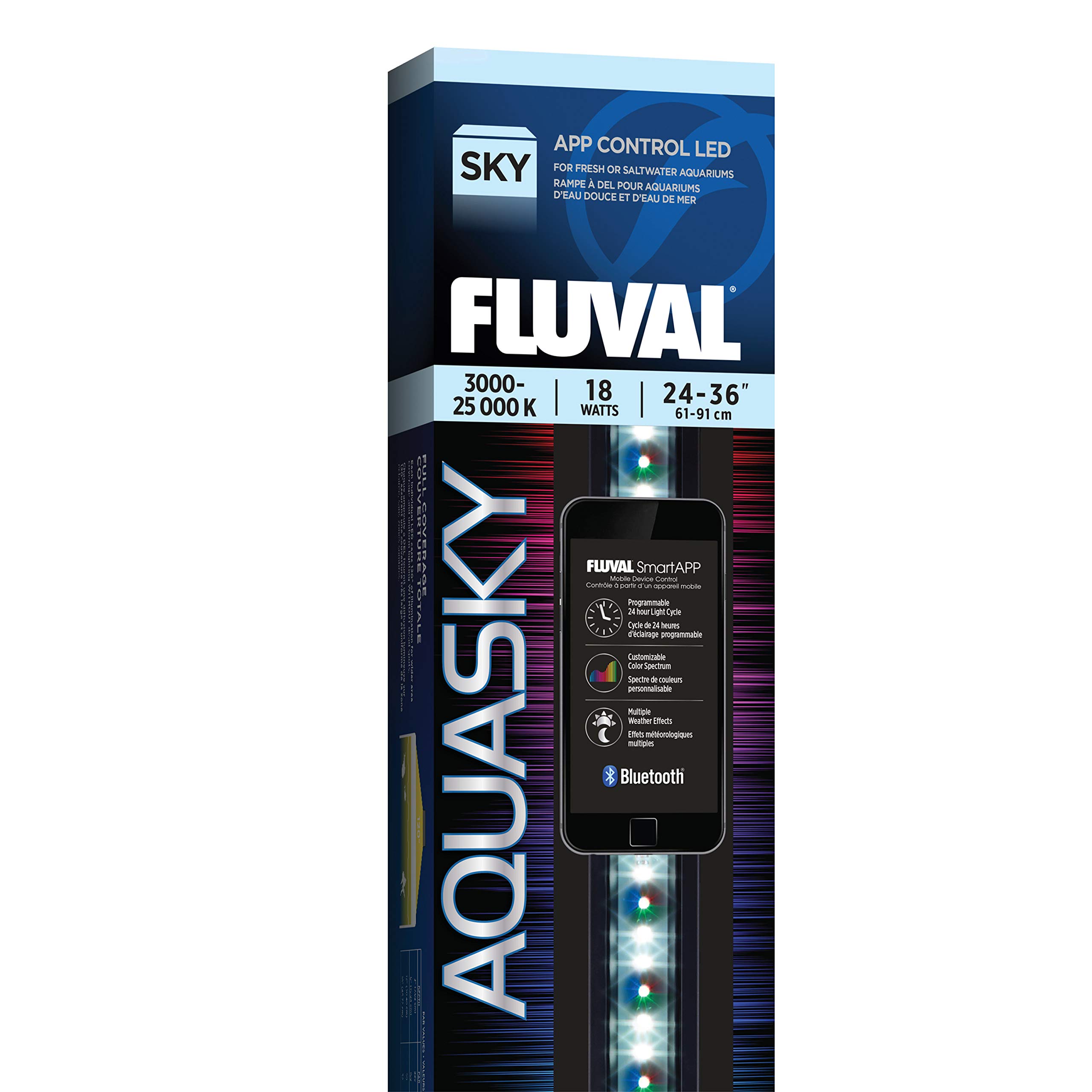
- Fully Customizable RGB + White Spectrum: The Fluval Aquasky 2.0 (18W) delivers vibrant, customizable lighting through RGB LEDs plus 6500K white LEDs. Create infinite color
- Bluetooth Control with FluvalSmart App: Easily program your light via the FluvalSmart App, which gives you total control over brightness, color, and timing. Adjust your 24-hour

- Vase-shaped, see-through body to check your butane level at any time
- Large, easy-to-use fuel wheel for convenience
ADA Amazonia v2: the high-leach benchmark
ADA reformulated Amazonia in 2022, and the v2 product leaches noticeably less ammonia than the original — but "less" is relative. Expect total ammonia nitrogen above 4 mg/L in week one, tapering toward 0.5 mg/L by week four. The substrate pulls KH down to 0-1 dKH almost immediately and parks pH between 5.5 and 6.2 for the first two months. Iron, potassium, and trace nutrients leach steadily, which is why ADA tanks famously grow stems and crypts so aggressively early on.
Side-by-side comparison
| Property | ADA Amazonia v2 | Tropica Aquarium Soil |
|---|---|---|
| Peak ammonia (week 1) | 3-5 mg/L | 1.5-2 mg/L |
| Time to safe for shrimp | 5-8 weeks | 2-3 weeks |
| pH range, first 60 days | 5.5-6.2 | 6.2-6.8 |
| KH effect | Pulls to 0-1 dKH | Pulls to 1-3 dKH |
| Nutrient release intensity | High, sustained 6+ months | Moderate, sustained 4-6 months |
| Granule durability | Improved over v1, moderate | Higher, holds shape longer |
| Expected useful life | 18-30 months | 18-24 months |
| Best for | Demanding stems, dark-start scapes | Epiphyte tanks, fast-stock setups |
| Typical cost per 9L bag | Higher | Lower |
For Buce specifically, the v2 product behaves better than the original in three ways: pellets are firmer and crumble less when you re-scape, the early pH drop is shallower (originals routinely hit 5.0), and depleted-bag performance at the 18-month mark is more consistent. The trade-off is that it still demands either a 3-4 week dark start with daily 50% water changes, or a fishless cycling protocol, before any livestock — including shrimp — enter the tank.
Tropica Aquarium Soil: the lower-leach alternative
Tropica's soil is a baked, ammonium-loaded clay similar to ADA in concept but tuned differently. Ammonia release is real but lower — typically peaking around 1.5-2 mg/L in week one and falling below detection by week three. KH drops to 1-3 dKH rather than zero, and pH lands in the 6.2-6.8 range. The result is a substrate you can plant heavily, run a one-week dark start on, and add shrimp to by day 21 with reasonable confidence.
For a Buce-dominated scape, Tropica's gentler curve aligns well with how most hobbyists actually use these tanks. Buce growth is slow regardless of substrate, so the explosive early-stage nutrient release of ADA is partly wasted on a hardscape-heavy scape made up mostly of epiphytes. Tropica also retains structure better under the kind of frequent re-arranging that Buce collecting tends to invite as the collection grows.
Matching substrate to your stocking timeline
The single most important question to answer before buying is: when do you plan to add livestock? A Buce-dominant tank with shrimp at week three is a Tropica project. A Buce-dominant tank that will sit fallow for two months before getting Boraras or chili rasboras can run either substrate, but ADA Amazonia v2 will give you faster background plant growth during the cycle.
If shrimp are part of the plan from day one, the calculus tips further toward Tropica. Neocaridina tolerate the 6.2-6.8 range Tropica produces; Caridina (Crystals, Tigers) prefer the 5.5-6.5 ADA range but are much more sensitive to residual ammonia. A botched dark start on ADA Amazonia v2 has wiped out more Caridina colonies than almost any other rookie mistake.
Lighting and CO2 considerations for a Buce tank
Buce is a low-to-medium light plant. Pairing high-leach ADA Amazonia v2 with low light usually means algae outpaces the limited plant mass, because the substrate is pushing nutrients into the water column faster than uptake can keep up. Tropica's lower leach rate is more forgiving on lower-light scapes. If you're running an entry-level fixture, see our low-tech planted tank lighting guide for fixture recommendations that match a Buce-only scape.
CO2 injection is optional for Buce but accelerates new leaf cycling noticeably. With CO2, either substrate works well. Without CO2, Tropica's gentler nutrient curve again matches uptake more closely and produces less algae over the first six months.
Long-term performance: what happens at month 18
Both substrates exhaust their nutrient load between months 18 and 30. The visible signs are the same: slower new leaf production, paler new growth, more reliance on water-column dosing. ADA Amazonia v2 typically lasts a few months longer because the initial nutrient load is higher. Tropica's structural integrity at the 18-month mark is slightly better — granules compress less and the bed breathes more freely, which matters in a tank you don't plan to tear down soon.
Both can be supplemented with root tabs from month 12 onward to extend life. Neither benefits from being capped with inert sand; Buce is rooted on hardscape, not in the substrate, so a clean active soil surface causes no problems and looks more natural.
Tank size considerations
For nano Buce tanks under 20 liters, the difference between substrates is amplified — a smaller water volume means proportionally higher ammonia concentrations during the leach phase. Tropica is the safer default at this size. For 60-200 liter Buce scapes, either works, with the substrate decision driven more by stocking timeline than tank volume. If you're still sizing up the tank itself, our tank size guide covers footprint trade-offs for epiphyte-dominant scapes.
Our pick for the typical Buce-dominant tank
Best overall for most Buce scapes: Tropica Aquarium Soil
For 80% of Buce-dominant builds — hardscape-heavy, shrimp included, low-to-medium light, no CO2 or first-time CO2 — Tropica Aquarium Soil is the better default. The lower ammonia leach makes early stocking realistic, the milder pH/KH drop is friendlier to Neocaridina and most rasboras, and the structural durability holds up to the re-scaping that Buce collecting tends to encourage.
Best for collector-grade scapes with patience: ADA Amazonia v2
If you are running a high-tech tank with CO2, a serious fixture, demanding stems alongside the Buce, and you can afford a six-week dark start with no livestock, ADA Amazonia v2 remains the substrate that produces the most visually impressive plant growth over the first year. The ada amazonia v2 vs tropica buce tank decision tips this way specifically when Buce is part of a larger nature-style aquarium rather than the centerpiece of a hardscape-focused scape.
What about cap substrates and mineral additives
Neither soil needs a cap. People sometimes layer a fine sand or gravel cap for aesthetic reasons; with Buce that adds nothing functional because the plants aren't rooting in the substrate anyway. If you want a darker visual, both substrates come in standard and "powder" granule sizes — the powder version is easier to plant any carpet you include and looks tighter visually around hardscape.
Remineralization is more important than cap choice. Both substrates strip GH along with KH, so a Buce tank should be dosed with a GH-only remineralizer (Salty Shrimp GH+, SaltyBee GH+) to maintain 4-6 dGH for shrimp and most fish. Our broader substrate selection guide covers remineralization protocols in more depth, and the ada amazonia v2 vs tropica buce tank conversation gets simpler once your remineralization routine is dialed in.
Frequently Asked Questions
Does Bucephalandra actually grow faster in ADA Amazonia v2 than in Tropica?
Marginally, and mostly in the first six months. Buce uptake from the substrate is limited because the plant is epiphytic — most nutrients come from the water column. The growth difference between ADA and Tropica is real but smaller than the difference either substrate makes vs. inert gravel. After month nine the two converge.
Can I switch from ADA Amazonia v2 to Tropica without tearing down the tank?
Not cleanly. Active substrates aren't designed to be partially replaced — disturbing a depleted ADA bed kicks up enough fines and trapped mulm to crash a stable tank. If your ADA Amazonia v2 is exhausted at month 24, the practical options are root tabs to extend it, or a full rebuild with fresh substrate of either brand.
How long should the dark start be for a Buce tank on ADA Amazonia v2?
Three to four weeks with the lights off, heater on, filter running, and 50% water changes every other day. Test ammonia weekly and don't stock until you read 0 ammonia and 0 nitrite with detectable nitrate. For Tropica the dark start can be shortened to 7-10 days with the same water change cadence.
Will either substrate hurt shrimp during normal use?
Not after the leach phase. Once both substrates have stabilized, they create the soft, acidic water Neocaridina and especially Caridina prefer. The risk window is the first 30-60 days, after which both substrates are shrimp-safe. ADA's lower pH end (sub-6.0 in some setups) can stress Neocaridina specifically — monitor and adjust with remineralizer if needed.
Is Tropica Aquarium Soil enough on its own or do I need a base layer?
A base layer like Tropica Plant Growth Substrate is optional. For a Buce-dominant tank with epiphytes on hardscape and minimal rooted plants, a single layer of the active soil at 3-4 cm depth is sufficient. A base layer matters more when you're growing demanding rooted stems or carpets alongside the Buce.
What KH should I target in a finished Buce tank?
2-4 dKH is the practical sweet spot. Both substrates pull KH down hard initially, so plan to remineralize back up to that range using a GH/KH+ blend if you want a stable pH, or stay at 0-1 dKH with a GH-only blend if you're running CO2 and don't mind the pH swing. Buce tolerates both approaches.
Which substrate produces less algae in the first 90 days?
Tropica, in almost every case. The lower ammonia leach means less of the nitrogen excess that drives diatom and green water blooms during cycling. ADA's higher leach is manageable with aggressive water changes and a heavy plant mass, but a Buce-only tank doesn't have enough fast-growing plant biomass to soak it up, so algae usually wins for the first month or two unless you supplement with stems.