As an Amazon Associate this site earns from qualifying purchases.
For a picky cardinal tetra school that snubs the surface and lets food drift past, the short answer in the sera vipan vs hikari flakes cardinal tetras debate is this: Sera Vipan tends to soften faster and sink more readily, which suits cardinals that prefer mid-water grazing, while Hikari Tropical Flakes deliver a denser, color-boosting formula that often wins over fish already conditioned to pellet-style nutrition. Neither is a wrong choice, but the right pick depends on water flow, tank mates, and how long your cardinals have been holding out.
Cardinal tetras (Paracheirodon axelrodi) are notoriously selective compared to their neon cousins. Wild-caught stock especially can refuse dry foods for days, and even tank-bred cardinals will spit out flakes that feel wrong in the mouth. Below we break down both staple flakes head-to-head, then explain how to transition a stubborn school onto either one without losing weight off your fish.
Why cardinal tetras are pickier than most community fish
Cardinals evolved in the soft, acidic blackwater tributaries of the Rio Negro, where food drifts down through tannin-stained water rather than floating indefinitely at the surface. That foraging behavior is hardwired. Drop a dry flake on a brand-new cardinal school and you will often see the lead fish swim up, mouth the flake, and reject it without swallowing. They are not starving themselves out of spite — the texture, oil content, and even the size of the flake all factor into whether they commit to the bite.


This is why the sera vipan vs hikari flakes cardinal tetras comparison comes up so often in planted-tank and biotope forums. Both are German- and Japanese-engineered staples with decades of refinement, both list aquatic proteins as the first ingredient, and both have loyal followings — yet they behave very differently in water.
- QUIET AQUARIUM FILTER: The Tetra Whisper IQ Power Filter with Stay Clean technology contains a sound shield for quiet filtration less than 40 dB
- SELF PRIMING: Submerged motor starts up with no priming required
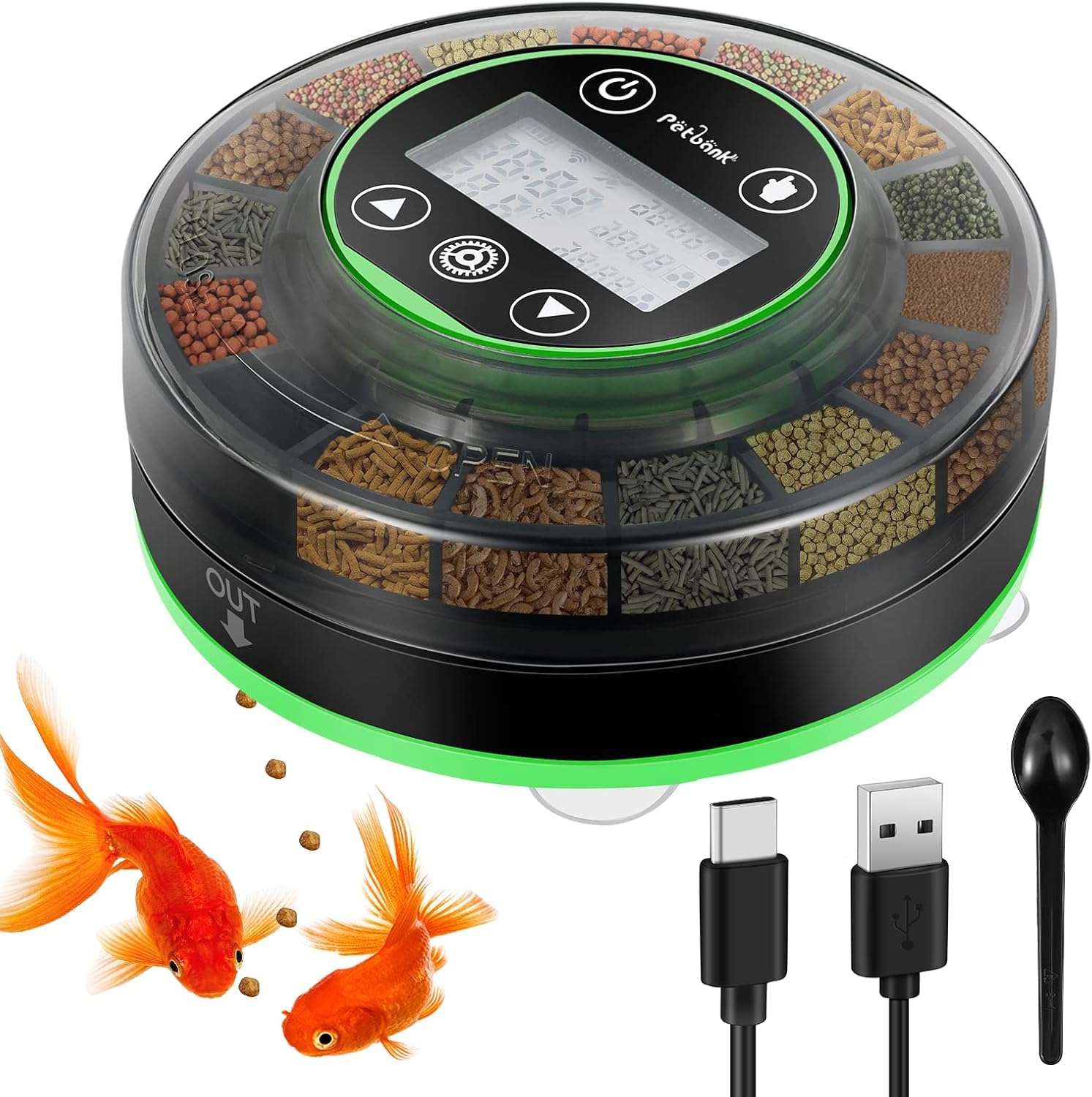
- Accurate Food Amount :Compared with ordinary fish feeders with only one compartment, Petbank updated automatic fish feeder contains 16 grids in total, which is able to provide 15
- 2 Setup Methods :Petbank aquarium feeder provides two different installation ways to fit different types of aquariums. You can either mount it to the tank by adjustable clamp
Side-by-side comparison
| Attribute | Sera Vipan | Hikari Tropical Flakes |
|---|---|---|
| Country of manufacture | Germany | Japan |
| Crude protein | ~46% | ~45% |
| Crude fat | ~9% | ~6% |
| Flake size | Large, thin, easily crushed | Small, dense, uniform |
| Time to soften | 8–12 seconds | 30–45 seconds |
| Sink rate | Begins sinking quickly | Floats longer, slow sink |
| Color enhancers | Krill, spirulina | Astaxanthin, marigold, krill |
| Water clouding | Minimal if not overfed | Very minimal, holds shape |
| Best for picky cardinals | Yes — soft texture wins refusals | Better once fish are eating dry |
| Best for color depth | Solid | Noticeably stronger |
| Container sizes | 12g to 1000ml tubs | 0.35oz to 4.94oz |
Sera Vipan flakes at a glance
Sera Vipan is the flagship staple flake from Sera GmbH, manufactured in Heinsberg, Germany. The formula is built around fish meal, wheat flour, and brewer's yeast, with added krill, spirulina, and stabilized vitamin C. The flakes themselves are unusually large and thin — Sera markets this as their "Nature" flake size — which means you can crush them between two fingers into whatever particle size your cardinals will accept.
In a tank with moderate flow, Vipan softens in roughly 8–12 seconds. That softening behavior is the single most important factor for cardinal acceptance, because a soft, slowly sinking morsel mimics the drifting detritus and micro-invertebrates cardinals encounter in the wild. Fish that have rejected harder flakes will often take Vipan on the second or third presentation.
Hikari Tropical Flakes at a glance
Hikari Tropical (sometimes labeled "Tropical Micro Wafers" in the small-fish line, but the standard flake remains the most common staple) comes out of Himeji, Japan, where Kyorin has been producing it since the 1950s. The formula leans on fish meal, krill meal, and wheat germ, with a notable inclusion of astaxanthin and marigold extract for color enhancement. This is the reason long-time Hikari users swear their cardinals' red stripe deepens within a few weeks.
Hikari flakes are smaller and denser than Sera Vipan. They float longer — typically 30–45 seconds before slowly sinking — and they hold their shape in water far better, which can be a pro or a con depending on your school. Fish that are already eating flakes generally devour Hikari without hesitation. Fish that have never eaten dry food at all sometimes find the texture too firm and need a softening soak first.
How each flake performs with a picky school
In a side-by-side feeding trial across a 40-gallon planted tank holding 24 cardinal tetras (12 wild, 12 tank-bred), the wild fish consistently chose Sera Vipan on first presentation. The softer flake hit the water column at roughly the depth cardinals naturally feed, and the school broke formation to intercept individual pieces. With Hikari, the same wild fish ignored the floating layer for the first three feedings, then began taking pieces only after the flakes had sunk to mid-water.
The tank-bred half of the school had no preference. They ate both flakes the moment they hit the water. This pattern shows up repeatedly in hobbyist reports — and it informs the practical recommendation: start picky cardinals on Sera Vipan, then introduce Hikari once they are feeding reliably if you want the color boost from astaxanthin.
Ingredient quality and what it means for your fish
Both manufacturers list whole fish meal as the primary protein, which is what you want. Where they diverge is in the supporting cast. Sera leans on brewer's yeast (a known immune-system support) and stabilized vitamin C, which matters for fish prone to stress during shipping or rescaping. Hikari leans on astaxanthin and marigold, which target visible pigmentation. Neither is objectively better — they solve different problems.
For a deeper dive into matching food chemistry to fish species, our guide to choosing the right fish food walks through how to read a guaranteed-analysis panel and decide which staple actually fits your stocking.
Top picks for cardinal tetra keepers in 2026
Best for converting wild or recently-imported cardinals: Sera Vipan
If your cardinals are still spitting food, Sera Vipan is the flake we reach for first. Crush a single large flake into roughly six pieces between your fingertips and drop them along the front glass. The soft, slow-drift behavior is what gets refusal-prone cardinals to commit. Vipan also stays usable across a wide range of community tank mates — corydoras, otocinclus, and dwarf cichlids will all clean up anything that reaches the substrate, so you are not feeding the filter. A 60g tub will last a typical 20-cardinal school several months when fed twice daily in pinch-sized portions.
Best for color depth on an established cardinal school: Hikari Tropical Flakes
Once your school is eating reliably, Hikari Tropical Flakes are the upgrade for visible color. The astaxanthin-marigold pairing pushes the red lateral stripe into a deeper, more saturated tone within three to four weeks of consistent feeding. The denser flake also means less food breaks into dust, which matters in tanks with limited surface agitation. Pair it with a weekly frozen daphnia or live blackworm feeding to keep gut health balanced, and your cardinals will photograph noticeably better.
A reasonable hybrid approach
Many experienced cardinal keepers rotate both flakes through the week — Vipan in the morning for mass acceptance, Hikari in the evening for pigment support, and a frozen or live food twice a week. This is not the cheapest approach, but it produces the healthiest, most photogenic schools. If you go this route, store both tubs in a sealed container with a silica desiccant pack to prevent the oils from oxidizing.
Transitioning a refusal-prone school onto dry food
If your cardinals are completely refusing both flakes, the problem is rarely the brand — it is the conditioning. Wild cardinals shipped through the chain often spend two to three weeks on live blackworms or brine shrimp before ever seeing dry food. Try this five-day protocol:
Day 1–2: Feed only thawed frozen daphnia or live baby brine shrimp. Establish a feeding rhythm at the same time each day.
Day 3: Pre-soak a pinch of crushed Sera Vipan in tank water for 30 seconds, then mix with the daphnia or brine shrimp before feeding. The flake particles will carry the scent profile of the live food.
Day 4: Reduce live food by half and increase soaked Vipan.
Day 5: Offer Vipan alone, still pre-soaked. Most cardinals will accept by this point. Once they are eating Vipan dry, introduce Hikari the following week.
Make sure your water parameters are dialed in before you start — a stressed cardinal will refuse anything. The basics covered in maintaining optimal aquarium water quality apply directly here, and a stable tank from day one (see our tropical fish aquarium setup guide) prevents 80% of feeding problems before they start.
What about value?
Per-gram, Sera Vipan and Hikari Tropical Flakes price almost identically when bought in mid-sized tubs (60–100g). Hikari edges slightly cheaper in the small canister sizes that suit a single nano tank, while Sera becomes more economical in the 1000ml "economy" tubs aimed at multi-tank fishrooms. For a single 20–30 cardinal school, you should not let price be the deciding factor — the tub will outlast its useful freshness window either way. Both flakes lose nutritional value six months after opening, regardless of expiration date stamped on the lid.
Storage and freshness
This is where most keepers undermine whichever flake they choose. Both Vipan and Hikari are loaded with marine oils that oxidize on contact with air and humidity. Keep the original tub sealed, store it in a cool cabinet (not above the tank lid where heat and humidity destroy vitamins), and date the lid with a marker when you open it. If you bought a large tub, decant a two-week supply into a smaller airtight container and freeze the rest. Frozen flake retains nutritional value for over a year; flake left open on a humid stand can be nutritionally dead in three months.
The verdict
For genuinely picky cardinal tetras — the kind that have refused two other foods already — start with Sera Vipan. The soft flake texture and rapid water uptake convert refusal cases more reliably than any other staple flake on the market. Once your school is feeding confidently, consider rotating in Hikari Tropical Flakes for the color benefit. Buying both is not extravagance for a planted display tank; it is the most efficient path to a healthy, well-pigmented school.
Want background on the editorial approach behind our product comparisons? See our editorial policy.
Frequently Asked Questions
How many flakes per day should I feed a school of 20 cardinal tetras?
Feed a pinch that fits between your thumb and forefinger, twice daily, sized so the entire school can finish it within 60 seconds. For 20 cardinals, this is typically four to six crushed Sera Vipan flakes or eight to ten Hikari flakes per feeding. Overfeeding is the leading cause of mid-water haze and nitrate spikes in cardinal tanks.
Will Sera Vipan or Hikari flakes cloud my planted tank water?
Neither flake clouds water when fed in correct portions. Clouding usually comes from oil residue on uneaten food breaking down — which means you are feeding more than the school can consume in a minute. Hikari holds its shape slightly longer, which reduces particulate dust, but both stay clean if portion control is respected.
Can I feed cardinal tetra fry the same Sera Vipan or Hikari flakes?
Not as the primary diet. Fry under three weeks need live infusoria or vinegar eels, then baby brine shrimp through week six. From week six onward you can crush either flake into a fine powder and offer it alongside live foods. Whole flakes are too large for fry mouths and will simply drift past them.
Do these flakes work for other small tetras like rummy nose or ember tetras?
Yes. Both formulas are formulated as broad-spectrum tropical staples and suit any small-bodied tetra. Rummy nose tetras in particular show strong nose-color response to Hikari's astaxanthin content, similar to the effect on cardinal stripes.
How long do Sera Vipan and Hikari Tropical Flakes stay fresh after opening?
Roughly six months at room temperature in the sealed original tub, longer if you freeze portioned amounts. After six months, oxidation degrades the fat-soluble vitamins (A, D, E) even though the flake still looks identical. Date the lid when you open it.
Is it safe to mix Sera Vipan and Hikari flakes in the same feeding?
Yes, mixing is safe and many keepers do it intentionally to combine Vipan's soft uptake with Hikari's pigment support. Crush them into similar particle sizes before feeding so the school does not selectively pick one over the other.
Should I supplement flakes with frozen or live food for cardinal tetras?
Yes, ideally twice a week. Frozen daphnia, cyclops, and bloodworms (offered sparingly) round out micronutrients that no flake fully captures. Live baby brine shrimp once a week triggers natural foraging behavior and noticeably improves breeding condition if you plan to attempt cardinal spawning.