As an Amazon Associate this site earns from qualifying purchases.
Quick Comparison: Hood vs Open-Top Bar
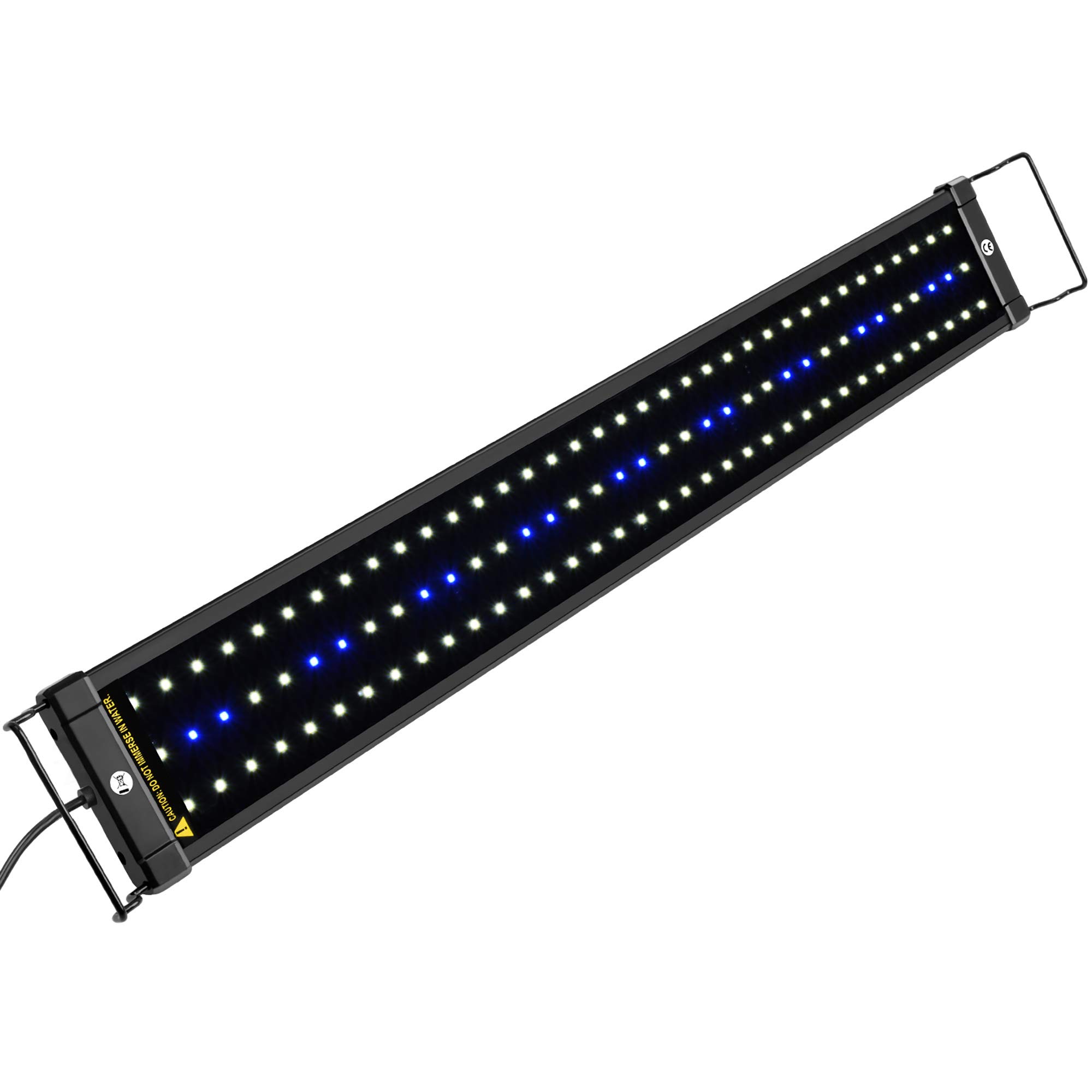
Before we go deep, here is the framing that matters most. The Marineland LED hood is a full plastic canopy that replaces the tank lid entirely. The Fluval AquaSky is a slim bar that mounts on adjustable brackets above an open-top tank or sits on a glass lid. That single difference drives most of the decision.
| Feature | Marineland LED Hood | Fluval AquaSky 2.0 |
|---|---|---|
| Form factor | Full hinged canopy/hood | Slim bar with extendable brackets |
| Light tier | Low light | Low to low-medium light |
| Spectrum | Fixed daylight + blue lunar | RGB + white, app-programmable |
| Controller | Switch on cord | Bluetooth via FluvalSmart app |
| Sunrise/sunset | No (manual on/off) | Yes, customizable ramps |
| Jumper containment | Excellent (sealed top) | Requires separate glass lid |
| Evaporation | Low | Higher unless lidded |
| Plant suitability | Anubias, Java fern, mosses | Above plus crypts, vals, easy stems |
| Best for | Beginners, kids' rooms, jumpers | Aquascapers wanting color control |
For a Marineland LED hood vs Fluval AquaSky low light community tank build, the short answer is this: the Marineland LED hood is the safer, simpler choice if you want a sealed top with built-in lunar lighting and fixed daylight whites, while the Fluval AquaSky 2.0 wins if you want programmable color, gradual sunrise/sunset cycles, and slightly more usable PAR over low-demand plants like Java fern, Anubias, and cryptocoryne. Both fixtures sit comfortably in the low-light tier (roughly 15-30 PAR at substrate in a 12-18 inch tank), so neither will burn algae onto your driftwood the way a high-output reef-style bar would.
This guide walks through how each fixture performs over a peaceful community tank stocked with tetras, rasboras, corydoras, and a handful of easy plants, what the trade-offs look like in real-world maintenance, and which one fits your tank style. We'll keep the Marineland LED hood vs Fluval AquaSky low light community tank comparison grounded in practical use rather than spec-sheet theater.

- HIGH QUALITY AQUARIUM LIGHT: Built in widened and thickened aluminum gloss shell is more beautiful and durable. Wider surface makes the heat dissipation effect of the light
- DIY MODE: You could DIY modes as you like, there have switch that on/off button & change the light color or enter the color cycle & brightness & timer setting. 9 light colors

- Orlushy aquarium heaters come in six different sizes, suitable for small fish tanks, aquariums and turtle tanks. Please choose the right wattage aquarium heater according to our
- Stable Heating: Stair shape heating that red light is on and heater starts to intermittently heat the water to the set temp, saving energy and electricity. When green light is on

- 【Rapid Heating and Two Temperature Control System】50W aquarium heater is sutable for 5-10 gallon fish tank and made of the most stable nickel-chromium heating wire, which can
- 【Intelligent Water Sensor and Over Temperature Protection】This fish tank heater has a unique intelligent temperature and water sensor system, the heater will automatically stop
What "Low Light Community Tank" Actually Means
A community tank in this context is the classic peaceful mix: small schooling fish (neon or ember tetras, harlequin rasboras, white cloud minnows), bottom dwellers like pygmy or panda corydoras, maybe a few cherry shrimp, and undemanding plants. Low light here means PAR readings of roughly 15-30 micromoles at substrate, no pressurized CO2, and a photoperiod of 6-8 hours. Both fixtures land in that envelope on standard 10 to 29 gallon tanks, so the question is rarely "which one grows plants" — it's "which one fits how you want to run the tank."
If you're still nailing down your stocking plan or plant list, our aquarium lighting guide and tropical fish aquarium setup walkthrough are worth a read before you commit to a fixture.
Marineland LED Hood: The Set-and-Forget Canopy
The Marineland LED hood is what you reach for when you want the tank to look finished, sealed, and unfussy. It hinges open for feeding, has cutouts for filter and heater cords, and includes a row of daylight LEDs plus a smaller row of blue lunar LEDs on a separate switch. There's no app, no schedule, no color temperature dial — you flip a switch and it works.
Where it shines
For a community tank in a living room, kid's bedroom, or office, the hood format solves three real problems at once: it stops fish from jumping (every keeper eventually loses a hatchetfish or zebra danio to an open lid), it dramatically cuts evaporation and humidity, and it hides the equipment ridge that an open-top setup exposes. The fixed daylight spectrum is balanced enough to make tetra reds and rasbora blues pop without skewing greenish like older fluorescent strip hoods. Anubias, Java fern, Bucephalandra, mosses, and most cryptocoryne species grow steadily under it.
If you want a deeper dive on the hood specifically — including how the integrated LED panel compares to the older fluorescent versions — see our Marineland LED aquarium hood review.
Where it falls short
The hood's spectrum is fixed. You cannot dial the blues down at midday, ramp warm tones at sunset, or schedule a moonlight phase. The lunar LEDs are essentially decorative — too dim to disrupt fish sleep, too blue to grow anything. PAR at substrate on a 20 gallon tank tends to land around 18-22 micromoles, which is genuinely low; demanding stems like rotala, ludwigia, or any carpet plant will stretch and thin out. And because the hood is a single molded plastic unit sized to specific tank footprints, you have to buy the exact one for your tank length — there's no flex.
Fluval AquaSky 2.0: The Programmable Bar
The AquaSky 2.0 is Fluval's entry-level programmable LED. It mounts on slide-out brackets that fit tanks roughly within a length range (each model covers a few inches of adjustment), and it pairs with the FluvalSmart Bluetooth app to give you full control over the white channel plus red, green, and blue. You can build a custom 24-hour cycle with sunrise, midday peak, sunset ramp, and moonlight phase, or pick from preset color profiles.
Where it shines
Programmability is the headline feature, and it matters more than you'd think. A gradual sunrise that takes 30 minutes to come up reduces fish stress noticeably — schooling fish that bolt for cover when a hood snaps on at full brightness will instead drift out of hiding as the light builds. The RGB channels also let you tune for color rendering: bumping red slightly makes tetras and cherry shrimp pop, while a touch of extra blue at midday makes a planted scape look crisp without going full reef-blue. PAR runs a hair higher than the Marineland hood (think 22-28 at substrate on a 20 gallon), which expands your plant menu to include vallisneria, easy stem plants, and faster-growing crypts.
Where it falls short
An open-top bar means you need a separate glass canopy or mesh lid if you have jumpers, and even then evaporation runs higher than with a sealed hood. The brackets are functional but visible — they don't disappear the way a hood does. The app is fine when it works, but Bluetooth pairing can be finicky on Android, and there's no Wi-Fi option, so you have to be in the same room to reprogram. For the size range, it's also priced noticeably above a basic hood.
Which One for Your Tank?
Pick the Marineland LED hood if
You want a sealed, beginner-friendly setup. You're keeping jumpers (hatchets, danios, killifish, some rasboras). The tank lives in a humid room or near electronics where evaporation matters. You don't plan to grow demanding plants and you'd rather flip a switch than open an app. Kids' tanks and starter community tanks are the sweet spot.
Pick the Fluval AquaSky 2.0 if
You care about how the tank looks at different times of day. You want sunrise/sunset ramps to reduce fish stress. You're aquascaping and want color tuning to make fish and plants pop. You're open to running an open-top tank or pairing the bar with a separate glass lid. You may want to expand the plant list later and value a bit more PAR headroom.
Setup Notes That Apply to Both
Whichever fixture you choose, photoperiod discipline matters more than the light itself. Start at 6 hours per day for the first month, watch for algae on the glass and hardscape, and only push to 8 hours if growth is clean. A timer (mechanical or smart plug) is essentially mandatory — inconsistent photoperiods are the single biggest cause of nuisance algae in low-tech tanks.
Substrate, filtration, and water parameters do more for plant health than another 10 PAR ever will. If you're still building the tank, look at our notes on choosing aquarium substrate and aquarium filtration tips before you obsess over light specs.
Frequently Asked Questions
Can I grow carpet plants like dwarf hairgrass under either fixture?
Realistically, no. Both the Marineland LED hood and Fluval AquaSky 2.0 sit in the low-light tier, and carpets like dwarf hairgrass, monte carlo, or HC cuba need medium-to-high PAR (40+ at substrate) plus pressurized CO2 to carpet cleanly. They may survive briefly under the AquaSky but will thin out and melt within a few months. Stick with Anubias nana 'petite' bonsaied onto hardscape, mosses, or crypt parva if you want a low-profile foreground in a low-light tank.
Will the Fluval AquaSky 2.0 work on a tank with a glass canopy?
Yes, and many keepers use it that way. The brackets are tall enough to clear most standard glass lids, and sitting the bar above glass cuts evaporation while still letting you keep jumpers contained. You'll lose roughly 10-15% of the light intensity reaching the substrate due to the glass, but for a low-light community tank that loss is negligible. Just clean the glass weekly — mineral deposits and biofilm on the underside cut light far more than the glass itself.
How long should I run the lights on a low light community tank?
Start at 6 hours per day for the first 4-6 weeks while the tank cycles and plants establish. If algae stays under control, push to 7 hours, then 8 hours as a long-term ceiling. With the AquaSky's ramp feature, count only the peak intensity hours toward your photoperiod — a 30-minute sunrise and sunset don't count as full photoperiod time. Anything over 8 hours in a low-tech tank almost always invites algae before it improves plant growth.
Do I need a timer with the Marineland LED hood?
Yes, absolutely. The hood has no built-in scheduling, so a basic mechanical timer or smart plug is non-negotiable for consistent photoperiods. Inconsistent lighting (manual on/off at different times each day) is the fastest way to grow green spot algae and diatoms. A $10 outlet timer pays for itself within the first month in reduced algae scrubbing.
Which fixture is better for tanks with shrimp?
Both work fine for neocaridina (cherry, blue dream, yellow) and caridina shrimp. The AquaSky's RGB tuning gives you a slight edge for color rendering — red cherries look noticeably more saturated under a slight red-channel boost. Shrimp don't care about spectrum or sunrise ramps, but they do care about stable parameters, so whichever fixture you pick, lock down the photoperiod with a timer and avoid lighting changes that drive algae blooms (which crash water quality during die-off).
Can I retrofit a Fluval AquaSky onto a tank that originally came with a Marineland hood?
Usually yes, but check two things. First, confirm the AquaSky's bracket range covers your tank's outer-to-outer length (the brackets extend a few inches, not unlimited). Second, decide whether you'll keep using the hood's glass insert as a canopy under the bar, or remove the hood entirely and source a fitted glass top. Removing the hood often means losing the back trim that hides cords, so plan how you'll route filter and heater cables before you commit.
Is the lunar/moonlight feature actually useful?
Mostly aesthetic. The Marineland hood's blue lunar LEDs are dim enough not to disrupt fish sleep cycles, which is the main concern, but they don't do anything for plants or fish health. The AquaSky's programmable moonlight is similar — pleasant to look at in the evening, harmless if kept dim and short, but not a feature worth choosing a fixture over. If you want to watch the tank at night, both work; if you don't, leave them off and save the electricity.
The Bottom Line
For a true beginner low light community tank where simplicity, jumper safety, and low evaporation matter most, the Marineland LED hood is the practical pick. For a keeper who wants to grow into aquascaping, tune color, and use sunrise/sunset ramps to reduce fish stress, the Fluval AquaSky 2.0 earns its price premium. Both will keep Anubias, Java fern, and easy crypts thriving over a peaceful tetra-and-cory community — the difference is how much control and polish you want along the way.
For broader fixture context across more brands and price tiers, our best LED lights for aquariums 2026 roundup covers the wider field.