As an Amazon Associate this site earns from qualifying purchases.
To sterilize Biocube 32 after marine velvet outbreak, you must remove all livestock to a separate treatment tank, run the display fallow (fishless) at 80°F for at least 76 days, deep-clean every piece of hardware with a 10% bleach solution, replace plastics that cannot be safely soaked, and refill with fresh saltwater plus new sand or thoroughly rinsed dry rock. Amyloodinium ocellatum (marine velvet) cannot survive without fish hosts beyond roughly two and a half months, so combining a strict fallow period with chemical disinfection of pumps, hoses, heater, and the AIO rear chambers guarantees the parasite is eradicated before you reintroduce livestock.
Why Marine Velvet Demands a Total Reset
Marine velvet is the most aggressive ectoparasite in reef-keeping. Free-swimming dinospores can wipe out an entire stocking list within 48 hours, and unlike ich, velvet kills before many hobbyists even recognize the symptoms. Once an outbreak hits a Biocube 32, the parasite's life cycle (tomont → dinospore → trophont) is everywhere: in the sand, on the rocks, inside the rear chambers, on the pump impeller, in filter floss, and clinging to silicone seams. You cannot simply medicate the display because copper, chloroquine phosphate, and hydrogen peroxide are unsafe for corals and inverts. A full sterilization workflow is the only path back to a healthy tank.
Before you start, accept the timeline: this is a 10-12 week project. Rushing the fallow period is the single most common reason aquarists relapse within months of restocking. If you want background on long-term tank chemistry while you wait, our aquarium water care guide covers parameters you will need to dial in before livestock return.

- 【Rapid Heating and Two Temperature Control System】50W aquarium heater is sutable for 5-10 gallon fish tank and made of the most stable nickel-chromium heating wire, which can
- 【Intelligent Water Sensor and Over Temperature Protection】This fish tank heater has a unique intelligent temperature and water sensor system, the heater will automatically stop

- ALL-IN-ONE AQUARIUM KIT, PACKED WITH VALUE - Comes complete with HD float 10 gallon glass tank, heater, Hang on Back filter, LED light, 5-in-1 cleaning tool set—no extra
- KEEPS TROPICAL & COLD-SENSITIVE FISH COMFORTABLE - Unlike most aquarium kits, ours comes with a reliable heater—essential for keeping delicate fish warm and healthy year-round
Comparison: Quarantine and Holding-Tank Canisters
| Model | Flow Rate | Best For | UV Sterilizer | Media Trays |
|---|---|---|---|---|
| SunSun Hw302 | 265 GPH | Fish hospital tank (20-29 gal) | Yes (9W) | 3 |
| SunSun Hw303B | 370 GPH | Invert/coral holding (30-55 gal) | Yes (9W) | 4 |
Step 1: Evacuate Livestock to a Treatment System
Catch every fish in the Biocube 32, including the cleaner shrimp's roommate goby hiding behind the rockwork. Move them to a bare-bottom hospital tank running copper power (Cu²⁺ held between 2.0 and 2.5 ppm) or chloroquine phosphate at 40 mg/L for a minimum of 30 days. Inverts, corals, and macroalgae cannot tolerate copper, so they go to a separate fish-free "holding" system for the same fallow duration as your main display. Velvet does not parasitize inverts, but tomonts can hitchhike on coral skeletons, so a 76-80 day fallow applies to that holding system as well.
This is where a reliable external canister becomes invaluable. A dedicated quarantine and hospital loop, run on a canister, is far easier to medicate and rinse than the AIO chambers in the Biocube itself.
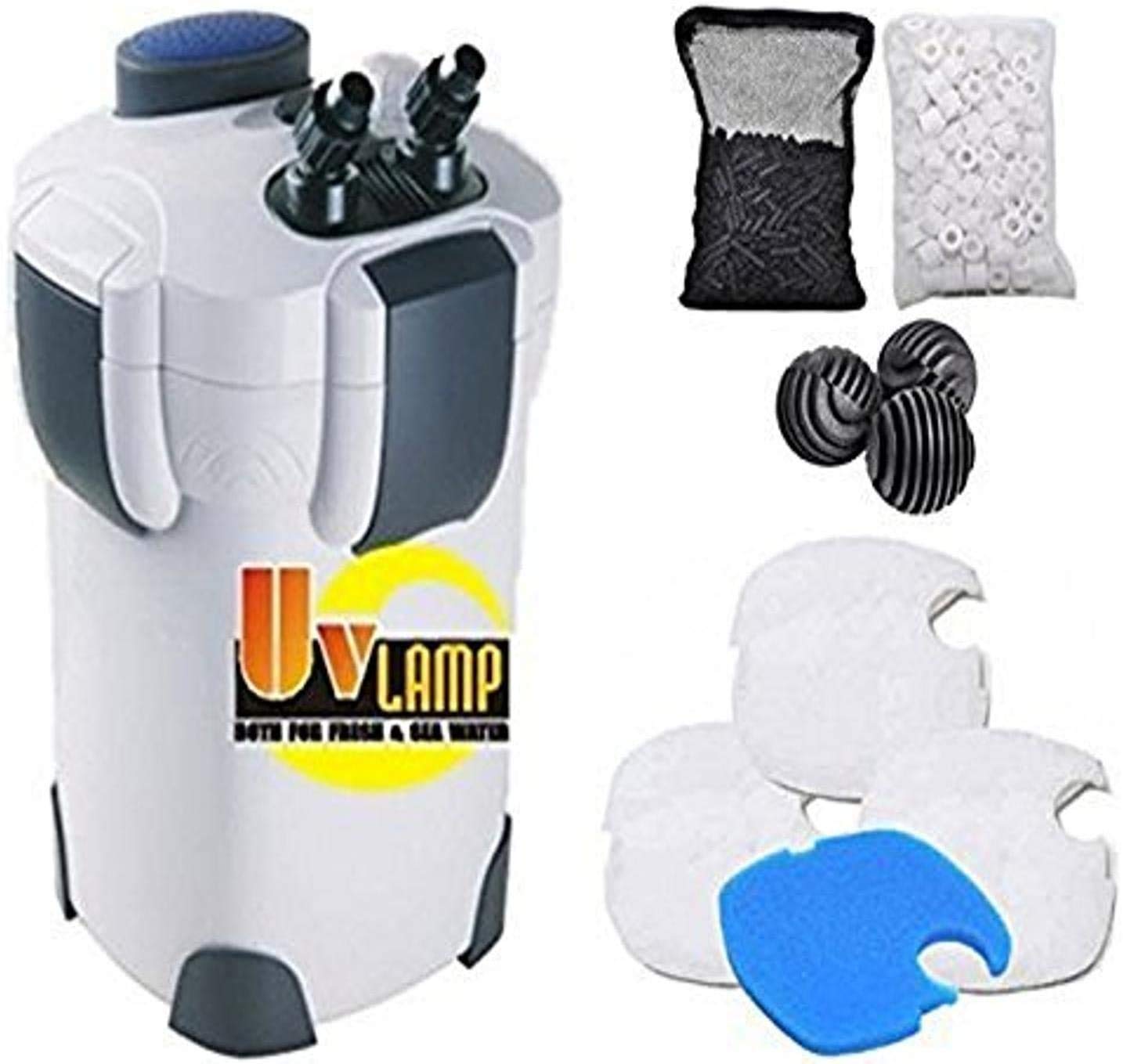
SunSun Hw302 265GPH Pro Canister Filter Kit
The Hw302 is the right size for a 20-29 gallon quarantine tank, which is the typical footprint hobbyists use to treat Biocube-sized stocking lists. The 265 GPH turnover keeps copper or chloroquine evenly distributed, and the included UV sterilizer adds a second line of defense against any free-swimming dinospores you might miss during catch-up. After the quarantine period ends, the canister itself can be bleach-cycled and reused on a future build. Pick it up here: Tetra Aquarium.
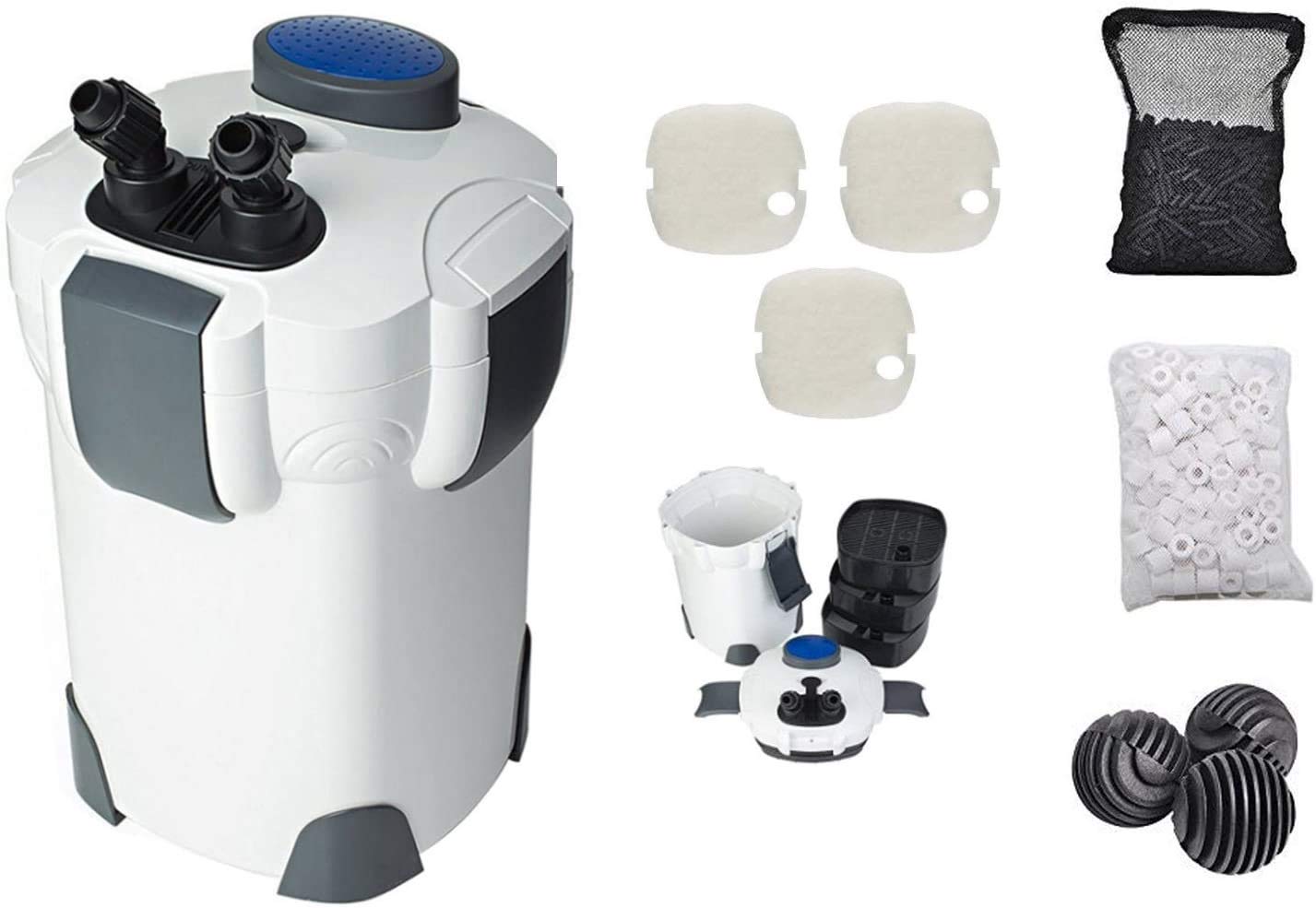
SunSun Hw303B 370GPH Pro Canister Filter Kit
If you also need to filter a 40-gallon invert/coral holding system in parallel with the quarantine tank, the Hw303B's larger media baskets and 370 GPH flow handle the higher bioload. It also comes with a built-in UV bulb, which is useful because tomonts that detach from coral skeletons can drift in the water column for days before settling. Grab the larger model here: HiTauing Aquarium Heater.
For more comparisons of external filtration options that work alongside AIO systems, see our guide to aquarium filtration systems.
Step 2: Begin the 76-80 Day Fallow Period
With livestock out, the display Biocube 32 still contains live rock, sand, and the parasite. You have two paths:
- Preserve the biological filter: Keep the rock and sand wet and warm (80°F) for 76+ days. No fish, no feeding (other than minimal ammonia dosing to maintain bacteria). Velvet dinospores will starve and tomonts will exhaust their reproductive cycle without hosts.
- Full sterilization: Tear the tank down completely, bleach every surface, and rebuild with new dry rock and fresh sand. This is faster (about 4-6 weeks once cycled) but you lose your biological filtration and any coralline progress.
Most Biocube owners choose option 1 if their rock and sand are healthy and the corals are valuable; option 2 makes sense if the tank also had cyanobacteria, dinos, or other persistent pests on top of velvet. If you go full teardown, our tropical fish aquarium setup walkthrough has a useful cycling refresher.
Step 3: Bleach-Disinfect the Hardware (After Fallow OR During Full Reset)
Whether you fallow-only or fully reset, the equipment itself must be sterilized because tomonts can persist in damp pump housings and behind rear-chamber walls.
What to soak in 10% bleach for 24 hours
- Return pump (Sicce or stock) - disassemble, soak impeller, housing, and volute separately
- Heater - soak the glass/titanium body only, never the cord
- Filter sock holder, media baskets, and any sponges (replace sponges; do not reuse)
- Powerheads, wavemakers, and their magnets
- Hoses, tubing, ball valves, and unions
- Acclimation buckets, nets, siphons, and turkey basters
- Refractometer caps and salinity probes (rinse only, no bleach)
How to neutralize bleach safely
After the 24-hour soak, rinse every item under hot tap water for several minutes, then submerge in a 1 mL per gallon sodium thiosulfate (dechlorinator) bath for another hour. Smell-test each piece; if you can still detect chlorine, repeat. Even trace bleach will nuke a coral the moment you fill the display.
Step 4: Address the Biocube 32 Display Itself
The acrylic-lidded glass tank has two trouble areas: the rear chambers (chambers 1-3 behind the back wall) and the silicone seams.
- Rear chambers: Drain completely, scrub with a 1:10 bleach solution using a long brush, let stand 30 minutes, rinse three times with RO/DI, then add dechlorinator water and let circulate for 24 hours before final drain.
- Silicone seams: Bleach is fine on cured aquarium silicone for short exposure; do not exceed 30 minutes on the seams to avoid weakening the bond.
- Stock LED hood: Wipe down the splash guard and inner reflector with a damp cloth dipped in 5% bleach, rinse, and dry. Never submerge electronics.
Step 5: Replace, Don't Reuse
Some items are not worth gambling on. Throw out and replace:
- All filter floss, filter socks, and mechanical sponges
- Activated carbon, GFO, and any chemical media that was running during the outbreak
- Sand bed if you went full teardown (live sand traps tomonts deep)
- Cheap plastic tubing showing biofilm staining
- Wooden utensils, scrapers, or magnets with felt backings
Salt mix is fine to reuse from the bag, but discard any pre-mixed saltwater that was in contact with the outbreak tank. Mix fresh saltwater with RO/DI only.
Step 6: Restart and Rebuild Slowly
Once everything is bleach-cleaned, neutralized, and reassembled, refill the Biocube 32 with fresh saltwater at 1.025 SG and 78-80°F. If you fallowed the rock and sand, your biological filter survives and you can add the first fish 76-80 days from the moment the last fish was removed - not the moment you started cleaning. If you did a full teardown, you need to fully cycle (4-6 weeks) before adding any livestock.
When you do restock, every new fish goes through a 76-day quarantine in your treatment system using copper or chloroquine, with prophylactic praziquantel and an observation period. This is non-negotiable - skipping QT is how velvet enters a display in the first place. For broader filtration upgrades to support your rebuilt system, browse our best aquarium filtration tips.
Common Mistakes That Cause Velvet Relapse
- Shortening fallow to 6 weeks: Some tomonts cycle slowly; you need the full 76 days at 80°F.
- Skipping the rear chamber bleach: The dim, low-flow corners are exactly where tomonts settle.
- Reusing the same nets: Mesh holds spores; either bleach-soak or replace.
- Adding a "reef-safe" fish without QT: No fish is velvet-safe. Quarantine every single fish, every time.
- Trusting UV alone: UV reduces but doesn't eliminate dinospores at hobbyist flow rates. It's a supplement, not a cure.
Frequently Asked Questions
How long does marine velvet survive without fish in a Biocube 32?
Published research and reefkeeping consensus put the maximum survival of Amyloodinium ocellatum at approximately 72-76 days at typical reef temperatures (78-80°F). Running fallow for a full 76 days adds a safety margin. Lower temperatures extend tomont dormancy, which is why warming the display during fallow is helpful, not harmful.
Can I keep corals in the Biocube during the marine velvet fallow period?
Yes, but only if no fish are present. Velvet does not infect corals, snails, shrimp, or crabs directly, though tomonts can ride on coral skeletons. Most aquarists move corals to a separate fish-free holding tank so the main display can be deep-cleaned, or they simply leave corals in place and run the display fishless for 76+ days while maintaining lighting and flow as normal.
Will hydrogen peroxide sterilize a Biocube 32 after a marine velvet outbreak?
Hydrogen peroxide can reduce free-swimming dinospores but will not penetrate cysts inside tomonts buried in sand or biofilm. It also stresses corals at the doses needed to be meaningfully antiparasitic. Use peroxide only as a supplementary spot treatment on bare rock during a full teardown - never as a replacement for the fallow period and bleach disinfection.
Do I need to replace the live rock to sterilize Biocube 32 after marine velvet outbreak?
Not necessarily. A 76-80 day fallow period at 80°F starves velvet without harming beneficial bacteria, so rock can be reused. Replace rock only if it also harbors persistent pests like aiptasia, majano, or cyanobacteria mats, or if you want a complete reset with dry rock and a fresh cycle.
Is a UV sterilizer enough to prevent velvet from coming back?
UV helps but is not sufficient on its own. At typical AIO flow rates, UV exposure time is too short to kill every dinospore on a single pass. The only reliable prevention is strict quarantine of every new fish for 76 days using copper or chloroquine phosphate, regardless of whether UV is running on the display.
What temperature should I keep the Biocube 32 at during the fallow period?
Hold the display at a steady 80°F. Higher temperatures accelerate the velvet life cycle, exhausting the parasite faster, while still being safe for live rock bacteria and most corals. Avoid temperatures above 82°F for extended periods because dissolved oxygen drops and coral stress climbs.
Can I add cleaner shrimp or snails during the velvet fallow?
Inverts are unaffected by velvet and can remain in the display throughout the fallow. They actually help by grazing biofilm and detritus where tomonts settle, accelerating their dispersal into the water column where they cannot find a host. Do not add new inverts from another system without a freshwater dip and a brief holding period to avoid introducing other pests.