As an Amazon Associate this site earns from qualifying purchases.
When you're weighing the cobalt neotherm vs fluval e discus heater question for a grow-out tank, the short answer is this: the Cobalt Neotherm is the better fit if you prioritize ultra-quiet operation, a slim shatter-resistant flat-panel build, and rock-solid temperature stability for juvenile discus. The Fluval E wins if you want a visible LCD readout, an early-warning fault display, and dual-temperature monitoring at a glance. Both will hold the 82-86°F range that growing discus demand, but they reach it with very different philosophies. Below we break down accuracy, safety, wattage sizing, and real-world reliability so you can pick with confidence.
Why grow-out discus need a heater you can actually trust
Discus are not a forgiving species when it comes to thermal stability. A grow-out tank, by definition, is housing fish that are still building body mass, organ structure, and immune resilience between roughly 2 and 5 inches. They eat heavily, they're fed multiple times a day, and they live in very warm water — usually 84-86°F — which sits much closer to the upper limit of dissolved oxygen than a typical community tank. A heater that drifts by even a degree or sticks on for an extra ten minutes can stress fish that are already metabolically maxed out.
That's the lens through which the cobalt neotherm vs fluval e discus debate really matters. Cheap preset heaters or older glass tubes often calibrate within ±2°F at best, and they fail in two unforgiving ways: they crack and shock the tank, or they stick on and cook everything. Both the Neotherm and the Fluval E are engineered specifically to mitigate those failure modes, but they take different routes to get there.
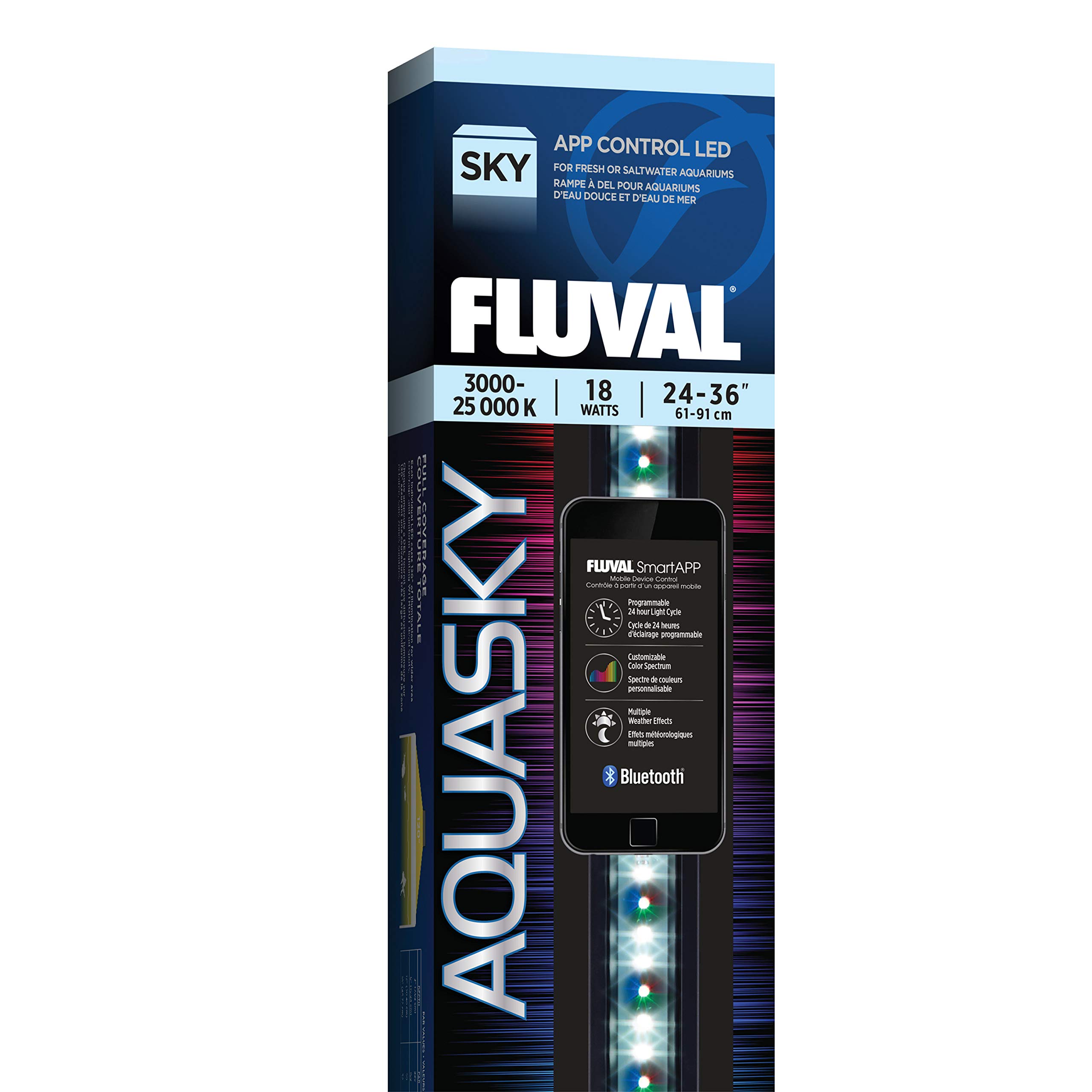
- Fully Customizable RGB + White Spectrum: The Fluval Aquasky 2.0 (18W) delivers vibrant, customizable lighting through RGB LEDs plus 6500K white LEDs. Create infinite color
- Bluetooth Control with FluvalSmart App: Easily program your light via the FluvalSmart App, which gives you total control over brightness, color, and timing. Adjust your 24-hour

- Vase-shaped, see-through body to check your butane level at any time
- Large, easy-to-use fuel wheel for convenience
At-a-glance comparison
| Feature | Cobalt Neotherm | Fluval E |
|---|---|---|
| Construction | Flat thermoplastic panel, shatter-resistant | Glass tube with ABS shroud / guard |
| Display | Small LED set-point indicator | Large backlit LCD, dual readout (set + actual) |
| Stated accuracy | ±0.5°F (factory calibrated) | ±0.5°C, user-calibratable |
| Safety shutoff | Automatic if run dry; thermal overload | Run-dry detection plus over/under temp alerts on LCD |
| Wattage options | 25W, 50W, 75W, 100W, 150W, 200W, 300W | 100W, 200W, 300W |
| Temperature range | 66-96°F | 68-93°F |
| Mounting | Suction cups, fully submersible, any orientation | Suction cups, fully submersible, vertical preferred |
| Warranty | 3 years | 5 years |
| Best for discus grow-out | Quiet, redundant pair setups, planted tanks | Solo unit with visible monitoring, fishroom setups |
Cobalt Aquatics Neotherm: the slim, silent option
The Neotherm's defining trait is its flat-panel form factor. Instead of a glass tube, the heating element is sandwiched inside a polymer plate that's roughly half an inch thick. For a grow-out tank — which often holds 6 to 12 juvenile discus in a 55 to 90 gallon footprint — that slim profile matters more than it sounds. You can tuck it behind a sponge filter, lay it horizontally near the substrate to drive convection, or hide it behind driftwood without sacrificing flow.
Calibration on the Neotherm is set at the factory and locked in. You get a single dial with one-degree increments and a small indicator LED that shows whether the unit is heating. Anecdotally, hobbyists report holding within 0.5-1°F of the dial setting across a typical fishroom temperature swing, which is excellent for the price bracket. The build is also genuinely shatter-resistant, which is meaningful in a discus grow-out where you're netting fish and moving décor more often than in a display tank.
The trade-offs: there's no actual-temperature readout, so you're trusting the dial plus your in-tank thermometer. And while Cobalt makes wattages from 25W up to 300W, the warranty is three years versus Fluval's five. For a pair-redundancy setup — two smaller heaters instead of one large one — the Neotherm's wattage granularity (especially the 75W and 150W options) is genuinely useful.
Fluval E Series: the heater that talks back
The Fluval E is the most information-dense submersible heater in its price bracket. The top of the unit carries a backlit LCD that shows both your set-point and the actual measured water temperature simultaneously. When water temperature drifts outside the safe range you programmed, the display turns red and flashes a warning. When everything is in spec, it stays blue. That single feature is why a lot of discus keepers — especially those running fishrooms with multiple tanks — choose it: you can walk down the row and instantly see which tank is misbehaving without dipping a thermometer.
Under the hood, the E uses a glass heating tube wrapped in an ABS plastic guard. The guard does two jobs: it prevents fish from being burned by direct contact with the glass (a real risk with big-bodied discus that bump into things), and it diffuses heat across a wider surface area. The unit is user-calibratable, so if your reference thermometer disagrees with the LCD by half a degree, you can correct it in software rather than living with the offset.
The downsides are honest ones. The E is bulkier than the Neotherm and looks more obviously like equipment in a planted display tank. Wattage choices are limited to 100W, 200W, and 300W, which forces some over-spec'ing on smaller grow-out volumes. And while the LCD is a brilliant diagnostic tool, it's also another point of potential failure over a multi-year service life.
Wattage sizing for a discus grow-out tank
The standard rule of 3-5 watts per gallon does not apply cleanly to discus. You're holding the tank 8-12°F above typical room temperature, often with bare-bottom water-change cycles that drop 50% of the volume daily. That means you need real heating headroom — but you also need fast, gentle recovery, not a 300W slam that triples the recovery shock.
A practical rule for grow-out tanks: target roughly 4 watts per gallon if you live in a stable 70°F room, and 5-6 watts per gallon if your fishroom dips into the mid-60s overnight. For a 75-gallon grow-out at 84°F, that means a 300W Neotherm or a 300W Fluval E will do the job — but a pair of 150W Neotherms placed at opposite ends of the tank will do it more evenly, with built-in redundancy if one fails. The Fluval E's wattage range makes pair setups less elegant on smaller tanks.
Placement, redundancy, and water-change shock
Discus grow-out routine is brutal on heaters. Daily 50-90% water changes mean your heater is constantly cycling on hard to recover the temperature delta, and if you're using cold tap water (even tempered), the heater can briefly find itself in much cooler water than its sensor expects. Both the Neotherm and the Fluval E handle this well, but placement matters: keep the unit in the highest-flow zone of the tank, not behind a sponge or in a dead corner, so the sensor sees the real bulk water temperature rather than a microclimate.
Redundancy is cheap insurance. Two 150W units cost only slightly more than one 300W, and if one sticks on or fails off, the other has too little authority to do real damage alone. This is where the Neotherm's wattage range becomes a real argument in the cobalt neotherm vs fluval e discus comparison: it lets you build a proper dual-heater grow-out without overshooting on wattage.
Which one should you actually buy?
For most hobbyists running a single grow-out tank in a heated home, the Fluval E earns its slightly higher price tag because the LCD genuinely catches problems before fish suffer. The over/under-temp warning has saved more than one batch of juveniles from a stuck thermostat.
For breeders or anyone running multiple tanks, two Neotherms per tank is the more defensible setup — cheaper per watt, redundant by design, and the flat form factor disappears in a bare-bottom grow-out. The trade is that you'll need a reliable external thermometer (digital with alarm, ideally) since the Neotherm offers no actual-temp readout of its own.
Either way, you're choosing between two of the more thoughtful heater designs on the market, and either one beats a generic preset unit by a wide margin for grow-out duty. For broader context on heater selection beyond just these two models, our aquarium heater guidance walks through sizing, safety, and brand selection more generally, and the top aquarium heaters of 2026 roundup covers the full landscape of options worth considering. If you're comparing across more brands, the Aqueon vs Marina heater comparison and our submersible heater head-to-head are useful next reads.
Frequently Asked Questions
What temperature should a discus grow-out tank actually run at?
Most breeders run grow-out tanks at 84-86°F. The warmer end accelerates metabolism, growth, and digestion, which is what you want for fish under five inches. Once fish reach adult size and move to display tanks, dropping to 82-84°F is fine and easier on heater duty cycle and dissolved oxygen.
Is the Cobalt Neotherm really shatter-proof?
The Neotherm is shatter-resistant, not literally shatter-proof. The thermoplastic body will not crack from thermal shock the way a glass tube will if it gets exposed to air while hot, and it survives bumps from fish or a misplaced net. It is not, however, a sledgehammer-proof brick. For grow-out duty where you're constantly working in the tank, that resistance to thermal shock is the more valuable property.
Can I run two Fluval E heaters on one tank for redundancy?
Yes, and it's a smart setup for any discus tank. Use two units at roughly half the wattage you would have used alone — for a 75-gallon, two 200W units rather than one 400W. Set both to the same target. If one sticks on, the other won't have enough wattage to cook the tank by itself; if one fails off, the other can hold temperature well enough to keep fish safe until you replace it.
Why does my Fluval E show a different temperature than my thermometer?
Slight disagreement (within about 1°F) between any heater's internal sensor and an external digital thermometer is normal — the sensor sees the water at its mounting location while your thermometer sees a different point in the tank. The Fluval E lets you calibrate this out: hold the calibration button and adjust until the LCD matches your trusted reference. The Neotherm has no calibration, so you'll need to mentally offset the dial.
Are these heaters safe in a bare-bottom grow-out tank?
Yes. Both are rated fully submersible and have run-dry protection that cuts power if they're accidentally exposed to air during a water change. In a bare-bottom tank, the bigger risk is heater-versus-glass contact when fish startle and bolt — mount the unit at least an inch off the glass using the included suction cups, and prefer horizontal orientation for the Neotherm so it can't tip and rest against the back wall.
How long should a quality discus heater last?
Five to seven years is realistic with normal duty. Discus tanks are harder on heaters than community tanks because of the heavy water-change cycling, so plan on replacing units at the five-year mark even if they still appear to work. Both Cobalt and Fluval honor their warranties (three and five years respectively) for manufacturing defects, but neither covers the gradual sensor drift that eventually shows up in any thermostat.
Do I need a controller, or is the built-in thermostat enough?
For a single grow-out tank, the built-in thermostat on either the Neotherm or the Fluval E is enough, especially if you pair it with an external alarm thermometer. For a fishroom with multiple grow-out tanks or a high-value breeding pair, an external controller like an Inkbird or Ranco gives you a true second layer of protection — the heater's internal thermostat handles fine control, and the external controller cuts mains power if anything runs away. It's a $30 upgrade that's hard to argue against.