As an Amazon Associate this site earns from qualifying purchases.
The best substrate heating cable for cold room walstad bowl setup is a low-wattage (typically 3-15W), fully submersible silicone or PVC-jacketed cable that you coil under your soil cap to gently warm the root zone, drive slow vertical convection, and stabilize a small, lidless bowl in a chilly room. For a Walstad-style jar or bowl between 1 and 5 gallons sitting in a 14-18C room, you want roughly 2-4 watts per gallon of cable wattage, a length that lets you space loops 2-3 cm apart, and a controller (inline thermostat or external Inkbird-style plug) so the cable cycles rather than runs flat-out. Skip cables marketed only for reptile vivariums — they are not always rated for full submersion under a saturated dirt cap.
This guide walks through what makes a substrate heating cable the right tool for a cold-room Walstad bowl, what specs actually matter, and the trade-offs versus a tiny submersible heater or a heat mat under the glass. Because heating cables for nano-scale aquariums are a niche, slow-moving category on Amazon (most listings rotate, get rebranded, or vanish), this is a buyer’s framework rather than a fixed product list — use it to evaluate whatever current SKUs you find when you shop.
Why a substrate cable beats a mini heater in a Walstad bowl
Diana Walstad’s “ecology of the planted aquarium” method leans on a thin layer of mineralized topsoil capped with inert gravel or sand. The soil is where mulm mineralizes, where roots feed, and where anaerobic pockets quietly cycle iron and manganese. In a warm room, ambient heat is fine. In a cold room — basements, north-facing offices, garden rooms, vacation cabins — the substrate becomes the coldest part of the bowl, which slows root uptake, stalls bacterial activity, and lets cold spots collect under the cap.
A submersible heater dropped into a 2-gallon bowl is a blunt instrument. The smallest reliable glass heaters start around 25W, and even those tend to overshoot in a tiny water volume, cooking shrimp or leaving a hot column near the glass. A heating cable, by contrast, distributes 5-10W across 3-5 meters of cable looped through the soil, so the temperature gradient is gentle and the convection it drives keeps the cap from going stagnant. For the right size of Walstad bowl, that is exactly the behavior you want.
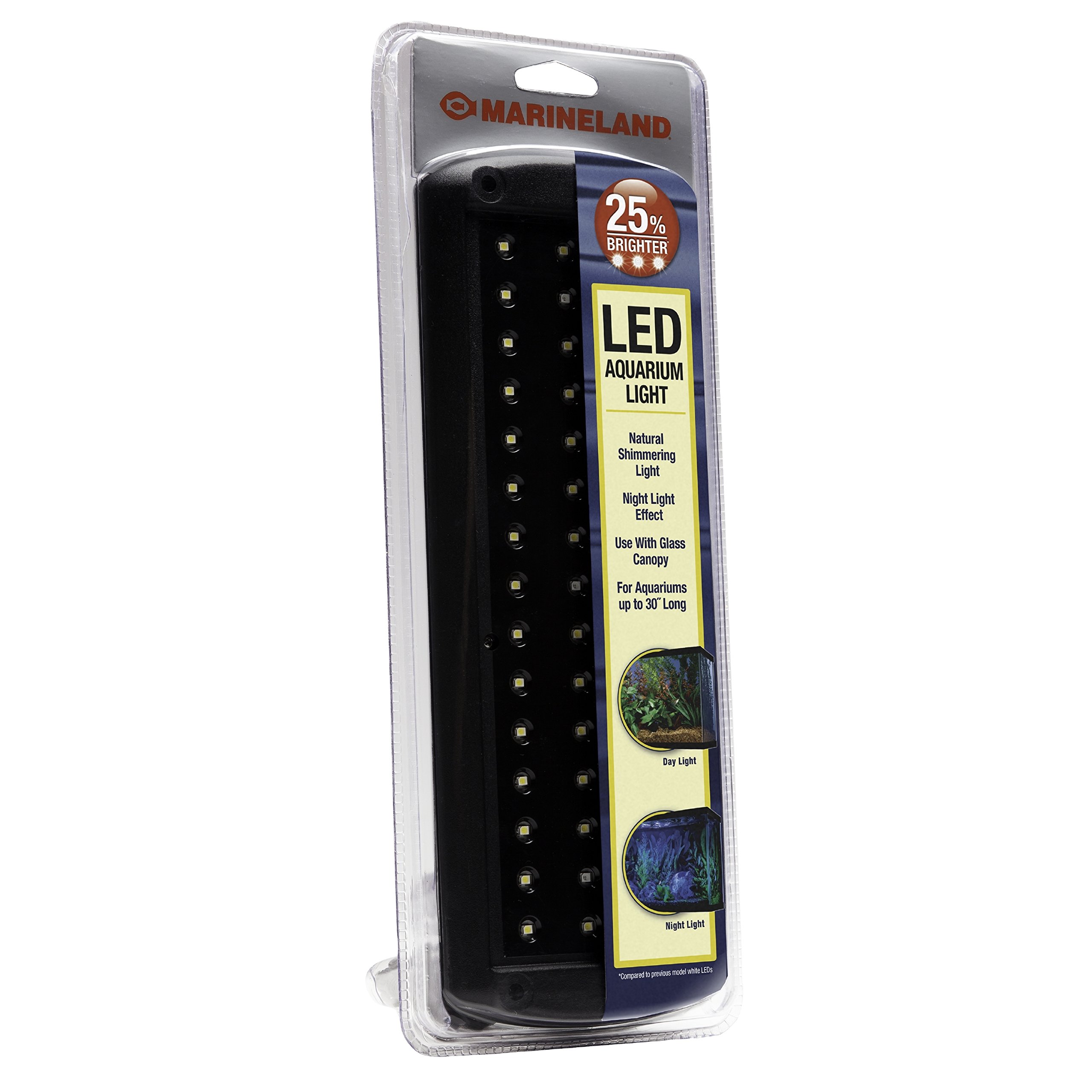
- BRIGHTER LIGHT: White LEDs create a shimmering illumination that mimics sunlight’s natural underwater effect – now 25% brighter compared to previous model white LEDs
- NIGHT LIGHT EFFECT: Enjoy your aquarium at night by switching to the blue night light mode
Comparing your three realistic options
| Heating approach | Best for | Pros | Cons |
|---|---|---|---|
| Substrate heating cable (5-15W) | 1-5 gal Walstad bowls in 14-19C rooms | Even root-zone warmth, drives slow convection, invisible once buried | Needs external thermostat, harder to remove during rescaping |
| Heat mat under glass | Bowls on wooden shelves where you can’t coil a cable | Easy to install, no internal hardware | Heats only the bottom inch, less even, can stress glass with thermal gradients |
| 25W submersible mini-heater | 3-5 gal bowls in mildly cool rooms (19-21C) | Off-the-shelf, integrated thermostat on better models | Visually intrusive, can overshoot in <3 gal volumes, hot spots near glass |
What to look for: specs that actually matter
Wattage and length
For a cold-room bowl, target 2-4 watts per gallon of total system. A 1.5-2 gallon Walstad bowl in a 15C room is well served by a 5W cable. A 3-5 gallon bowl in the same room wants 10-15W. Length matters as much as wattage: a 3-meter, 10W cable that you can coil with 2-3 cm spacing will warm the substrate evenly, while a stubby 1-meter, 15W cable concentrates heat in one spot and risks scorching roots or boiling off nearby moisture in the soil.
Jacket material and submersion rating
You want silicone or food-grade PVC with explicit aquarium/full-submersion certification. Reptile cables are often only rated for damp substrate, not for sitting under a saturated dirt cap for years. The jacket should be flexible at room temperature (a stiff cable refuses to hold a tight coil and lifts your cap) and clearly labeled IP68 or “fully waterproof.”
Cold lead length
The “cold lead” is the unheated section between the plug and the heated portion. In a Walstad bowl you want at least 60-90 cm of cold lead so the entry point through your substrate stays cool and your plug sits well away from the bowl. Short cold leads force the heated section to bend immediately as it enters the bowl, which weakens the jacket over time.
Thermostat compatibility
Almost no aquarium heating cable has a built-in thermostat. Plan on pairing it with an external controller — an Inkbird ITC-308, a Willhi WH1436A, or any plug-in differential thermostat with a waterproof probe. Drop the probe into the water column (not the substrate) and set a tight differential of 0.5-1C. Without a controller, even a 5W cable will slowly creep your bowl up by several degrees on a still day.
How to size a cable for a cold-room Walstad bowl
The fastest way to size the best substrate heating cable for cold room walstad bowl setup is to work backwards from your delta-T — the difference between your target bowl temperature and the coldest the room gets at 3 a.m.
- Delta-T of 3-5C (e.g., 18C room, 22C target): 2 watts per gallon is usually enough.
- Delta-T of 6-9C (e.g., 14C room, 22C target): 3-4 watts per gallon, and consider a partial lid to reduce evaporative cooling.
- Delta-T over 10C: a cable alone is not the right tool. Add a small heat mat under the bowl, or move the bowl.
Because Walstad bowls are usually open-top, evaporation is a constant drag on temperature. Every milliliter that evaporates carries heat away. A loose glass cover or a glass watch dish balanced over half the bowl can cut evaporative loss by 40-60% without strangling gas exchange.
For most cold-room Walstad bowls the cable wins on aesthetics and gentleness. The heat mat is the right call only when you cannot disturb an established substrate. The mini-heater is the fallback when you want plug-and-play and your room is not actually that cold.
How to install a heating cable in a Walstad bowl
Installation is the single biggest factor in whether your cable is the best substrate heating cable for cold room walstad bowl setup or a buried failure point. Done well, it disappears for years. Done poorly, it kinks, scorches roots, or lifts your dirt cap.
- Dry-fit first. Coil the cable in the empty bowl with 2-3 cm spacing between loops. Use a few dabs of aquarium-safe silicone or small ceramic suction-cup standoffs to keep the cable 5-10 mm off the glass.
- Bury in soil, not gravel. Add your mineralized topsoil over the cable to a depth of 2-3 cm. The cable should sit roughly in the middle of the soil layer, not at the very bottom and not against the cap.
- Cap with 2-3 cm of inert gravel or sand. The cap protects the cable from physical disturbance and slows soil clouding during planting.
- Route the cold lead vertically up the back glass. Use a suction cup to hold it. The plug should sit higher than the water line in a drip-loop arrangement so any condensation runs away from the outlet.
- Wire through a thermostat with the probe in the water column. Set the controller 0.5-1C below your target so the cable cycles in short bursts rather than running continuously.
Common mistakes that kill cables (and shrimp)
Most heating-cable failures in Walstad bowls come from three avoidable mistakes. First, running the cable without a thermostat — even a 5W cable will drift a sealed bowl 3-5C above ambient if it runs 24/7. Second, coiling the cable too tightly so adjacent loops touch and create a localized hot spot that scorches the jacket from the inside. Third, treating the cable like a primary heat source for a 10-gallon-plus tank — cables are a root-zone tool, not a bulk water heater.
If your bowl houses sensitive livestock (Neocaridina shrimp, sparkling gourami, scarlet badis), keep a stick-on LCD thermometer on the outside of the glass for at-a-glance verification, and check it during the first week morning and night. Cables are reliable, but the controller-probe pairing is where most rigs drift.
Substrate choices that play well with cables
The Walstad method usually means mineralized topsoil capped with sand or fine gravel. Cables work well with this layered structure because the soil insulates upward and the cap distributes heat laterally. Avoid burying a cable directly under a thick layer of pure aquasoil (such as ADA Amazonia) — the aquasoil pellets fracture under prolonged warmth and can release excess ammonia for weeks. For more on choosing what goes under your cap, see our substrate selection guide and the deeper roundup at best aquarium substrates 2026.
When to skip the cable entirely
A cable is not the answer for every cold-room setup. If your “cold room” sits below 12C, you need a primary heater of some kind — a cable rated for 10W cannot pull a 3-gallon bowl up 12C against constant ambient loss. If your bowl is over 5 gallons and you only need a mild boost, a properly sized submersible is simpler. And if you cannot fit an external thermostat, a small heater with an integrated thermostat is safer than an uncontrolled cable. For sizing primary heaters, our aquarium heater guidance walks through wattage-per-gallon math.
Frequently Asked Questions
Can I use a reptile heating cable in a Walstad bowl?
Only if the manufacturer explicitly rates it for full submersion in freshwater — most reptile cables are rated for damp substrate, not for sitting under saturated soil for years. Look for IP68 marking and aquarium-specific language. When in doubt, choose a cable sold for planted-tank or terrarium-with-water-feature use rather than dry-vivarium use.
What wattage heating cable do I need for a 2-gallon Walstad bowl in a 15C room?
About 5-8W is the sweet spot. Two watts per gallon is the baseline; bump to 3-4W per gallon when the delta-T between room and target exceeds 6C. A 5W cable with an external thermostat will cycle on and off and hold a 2-gallon bowl at 22C without overshooting, while a 15W cable in the same bowl risks running too hot in short bursts and creating thermal stratification.
Do I need a thermostat for an aquarium heating cable?
Yes, almost always. Aquarium heating cables typically ship without built-in thermostats, and even a low-wattage cable will slowly creep the water temperature upward if it runs continuously. Pair the cable with an inline plug-in thermostat (Inkbird ITC-308 or similar) and place the probe in the water column for the most stable readings.
Will a heating cable disturb the anaerobic layer that Walstad bowls rely on?
No, if installed correctly. Gentle warmth drives mild vertical convection in the water column but does not stir the soil itself. The anaerobic pockets that mineralize iron and manganese live in the lower millimeters of the soil layer, well below the cable’s coil and well below the diffusion zone that warmth could influence.
How long do aquarium substrate heating cables last?
A quality silicone-jacketed cable installed without sharp bends or touching loops lasts 5-10 years. The most common failure modes are jacket abrasion from gravel during rescaping and thermal damage from loops that were coiled too close together. Avoid disturbing the substrate once the cable is buried, and rescape around it rather than across it.
Can I combine a heating cable with a small submersible heater?
Yes, for larger bowls (5 gallons-plus) in genuinely cold rooms (under 14C ambient). Use the cable for root-zone warmth and the submersible for bulk water heating, but wire them through separate thermostats with the submersible set 0.5C higher so the cable does most of the gentle cycling and the heater only kicks in during sustained cold snaps. This dual-zone approach mimics how heated-substrate displays are run in commercial aquariums.
Are heating cables safe with shrimp and snails?
Yes, because the cable surface temperature stays well below scalding levels under normal operation — typically 30-35C at the jacket. Shrimp and snails will not burn on contact. The bigger risk is thermostat failure causing runaway heating, which is why a separate temperature alarm or a stick-on LCD thermometer for daily checks is worth the few dollars it costs.
For broader context on running stable nano-systems, see our water quality maintenance guide, which covers the parameter stability that low-volume Walstad bowls demand. With a properly sized cable, a tight thermostat, and a sensibly capped substrate, even a 2-gallon bowl in a cold basement can hold its temperature within half a degree for years.