As an Amazon Associate this site earns from qualifying purchases.
If you keep a Red Sea Reefer 170 in a living room, the quiet return pump red sea reefer 170 shoppers ask about almost always turns out to be a brushless DC pump rated between 700 and 1000 GPH, mounted on a thick foam pad, with the impeller spun down to roughly 60-75% on its controller. That combination matches the Reefer 170's recommended turnover (about 5-7x display volume), keeps the pump well below its peak noise output, and isolates vibration from the sump and cabinet panels that would otherwise broadcast hum into the room. Below we break down exactly how to pick, size, and silence a return pump for this specific tank.
Why the Reefer 170 needs a different conversation about noise
The Reefer 170 is a 34-gallon display with a 9-gallon sump tucked into a relatively narrow cabinet. Two acoustic quirks make pump choice harder than on bigger Reefers. First, the cabinet has less internal volume to absorb sound, so any pump hum reflects off the back panel and exits through the front doors. Second, the sump's smaller return chamber means water level fluctuates more with evaporation, and a pump pulling air from a low waterline is the single loudest failure mode in reef tanks. Both issues are fixable, but they shape what "quiet" actually means for this tank.
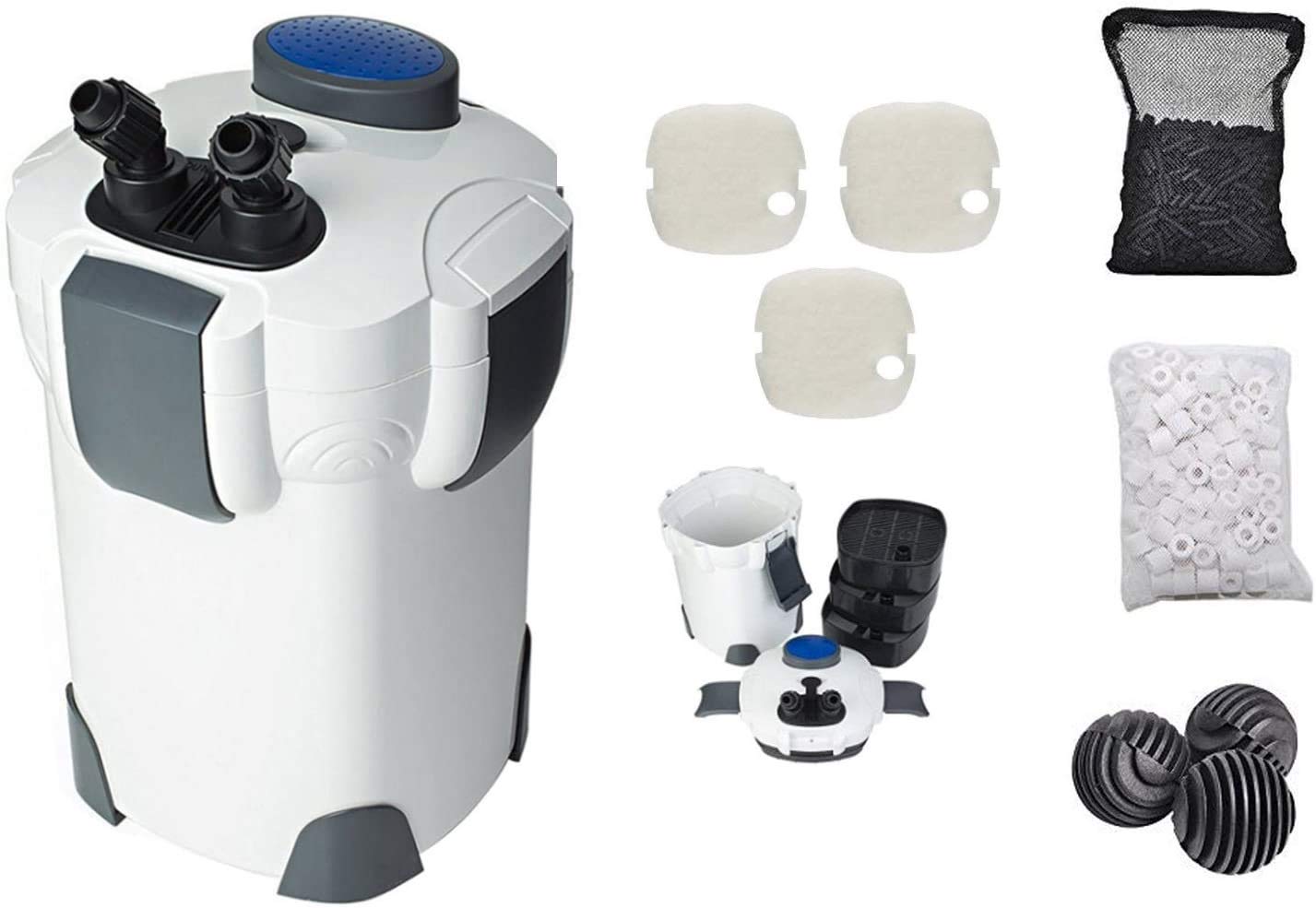
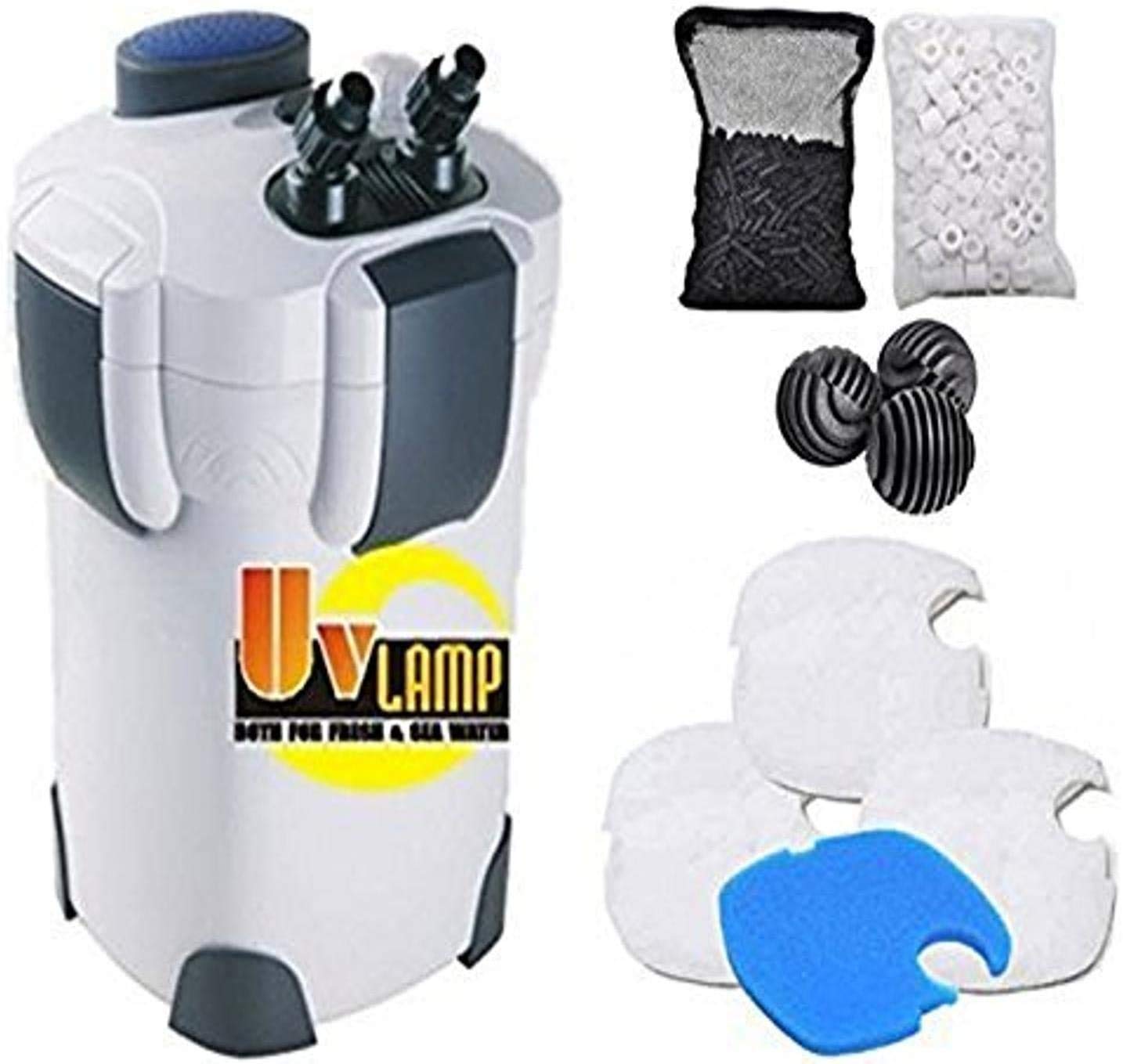
In a fish room or basement, you can tolerate a pump that produces 40-45 dB of structural hum. In a living room two meters from a couch, you want the pump itself under 35 dB at one meter, and you want the cabinet doors closed without trapping heat. That narrows the field considerably.
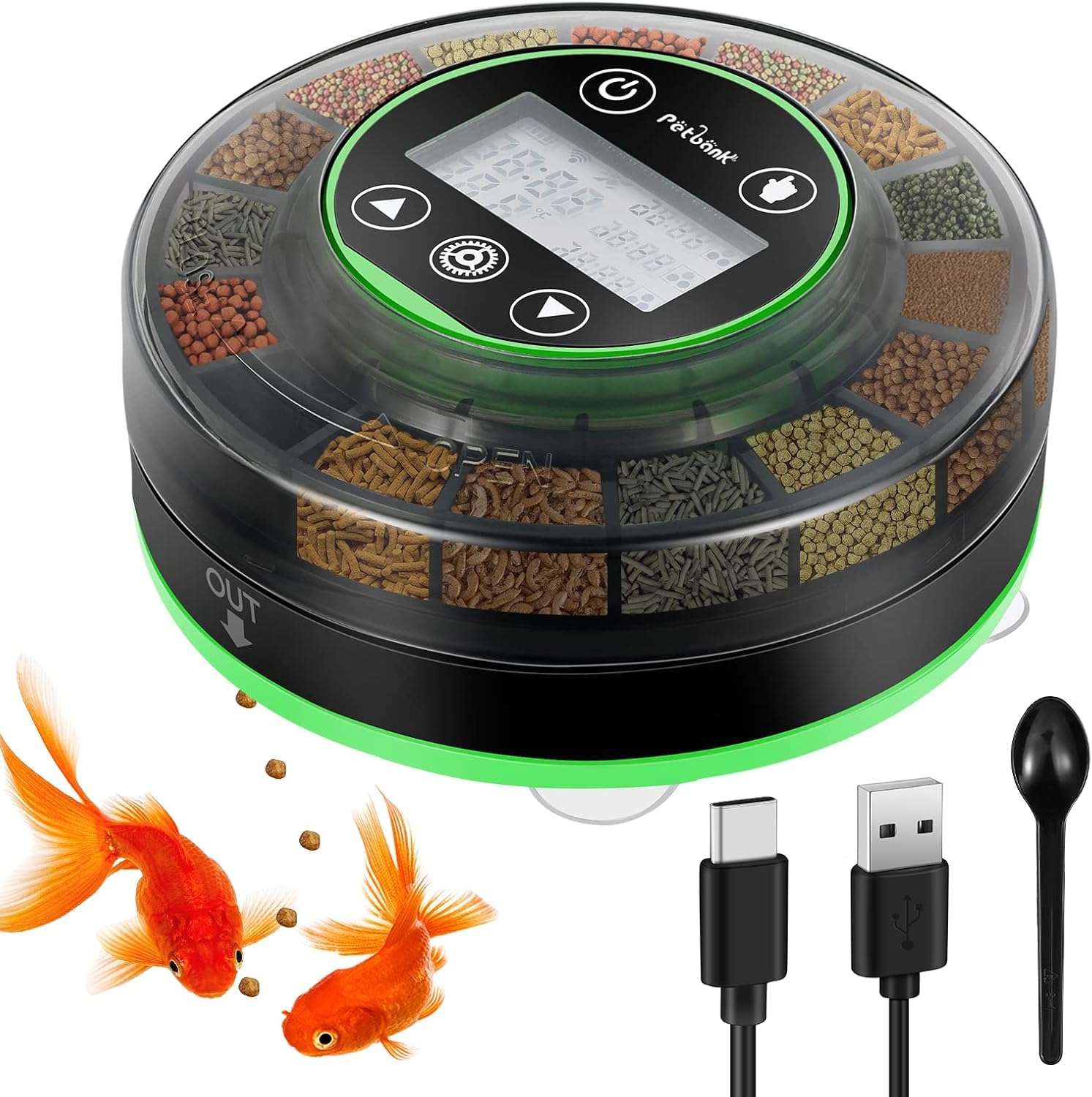
- Accurate Food Amount :Compared with ordinary fish feeders with only one compartment, Petbank updated automatic fish feeder contains 16 grids in total, which is able to provide 15
- 2 Setup Methods :Petbank aquarium feeder provides two different installation ways to fit different types of aquariums. You can either mount it to the tank by adjustable clamp
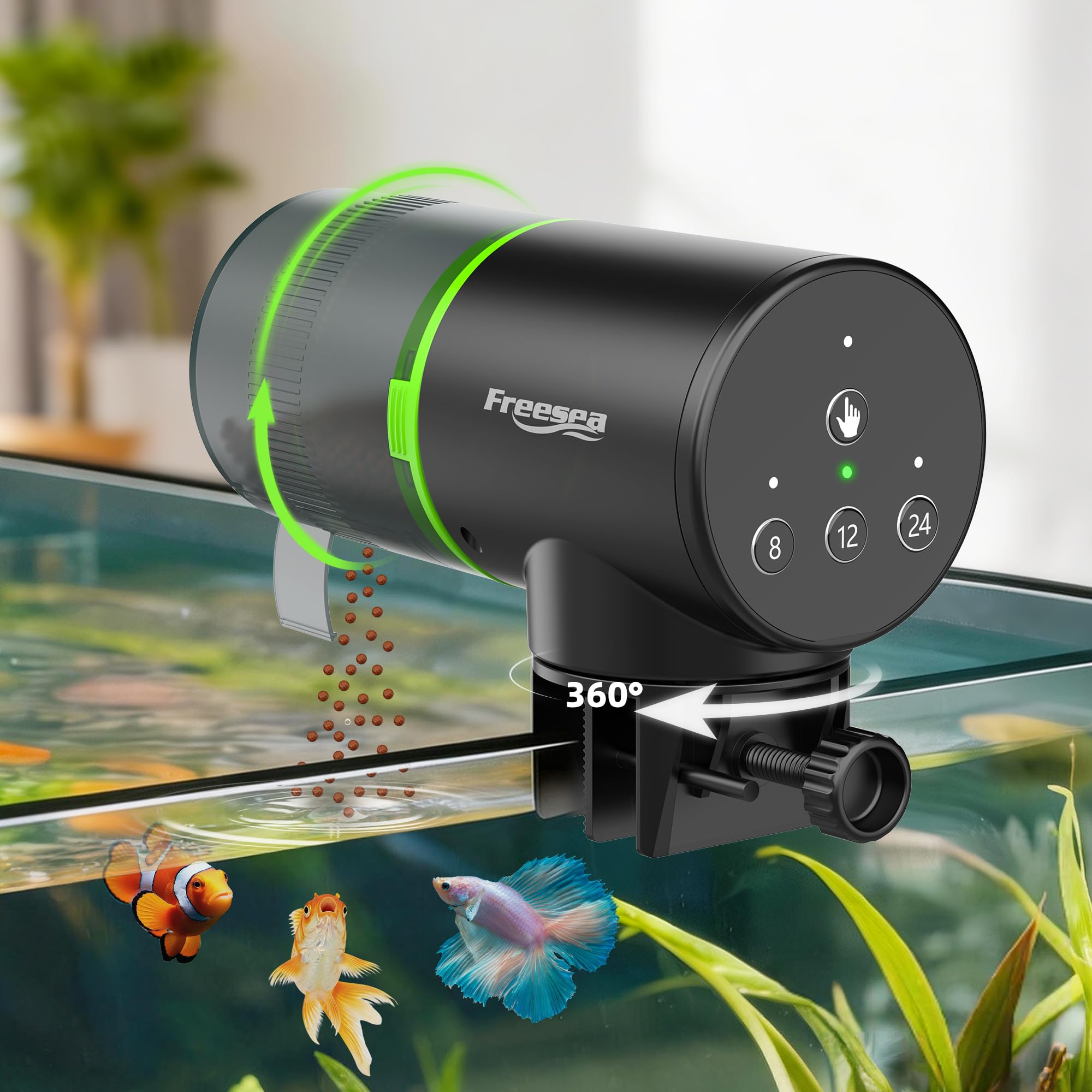
- Tailor-made for aquarium enthusiasts, this auto fish feeder eliminates vacation feeding worries for family travel, business trips, weekend getaways. It handles daily feeding for
- Unlike orthers feeders complex setup, inaccurate timers causing over or missed feeding, clogging, poor compatibility, our automatic fish feeder has 1s setup, precision feeding
Comparison: pump categories worth shortlisting
| Category | Typical max flow | Typical noise at 70% | Best for Reefer 170? |
|---|---|---|---|
| Compact DC return (700-900 GPH class) | 700-900 GPH | 30-34 dB | Ideal sizing, quietest in-class |
| Mid DC return (1000-1300 GPH class) | 1000-1300 GPH | 33-37 dB | Good if you run reactors or a UV |
| Large DC return (1500+ GPH) | 1500-2000 GPH | 36-42 dB | Oversized; runs too slow to be efficient |
| AC return pump | Fixed | 35-45 dB | Generally avoid in living rooms |
How to size a quiet return pump for the Reefer 170
Red Sea's documentation suggests a return pump producing roughly 700 liters per hour (about 185 GPH) at the actual head height of the Reefer 170, which is approximately 1.2 meters from sump to display. Because every pump's rated flow drops significantly with head pressure, you should not buy a pump rated at 185 GPH on the box. You want a pump rated between 700 and 1000 GPH at zero head, so that after the head loss and after you dial it back on the controller, you are still in the target range.
Running a DC pump at 60-75% of maximum output is the single biggest noise reduction trick available. Impeller cavitation, motor whine, and bearing chatter all scale non-linearly with RPM. A pump cruising at 70% is dramatically quieter than the same pump pinned at 100%, and the gap widens with age as bearings wear.
DC versus AC pumps for a living-room reef
An AC pump runs at a single fixed speed determined by line frequency. It is mechanically simple, cheap, and reliable, but you cannot tune it down if it turns out to be loud, and the magnetic hum of a synchronous motor transmits readily through plastic sump walls. For a living-room Reefer 170, an AC return pump is usually the wrong call unless you find one specifically reviewed as silent by other Reefer owners.
A DC pump uses a brushless motor driven by an external controller. The controller lets you set output anywhere from roughly 20% to 100%, often with a feed-mode button that pauses flow for feeding. The brushless design eliminates brush noise entirely, and the variable-speed capability means you can find your tank's individual sweet spot where flow is adequate and noise is minimal. For this specific tank in this specific room, a DC return pump is almost always the correct choice.
The trade-off is that DC pumps have a controller, a low-voltage power brick, and a sensor wire, all of which can fail independently of the wet end. Keep the controller out of splash range and check it during your monthly maintenance.
The compact DC class is the sweet spot. The mid class is justified only if you tee off the return for a calcium reactor, biopellet reactor, or inline UV sterilizer, where the extra head loss eats into your usable flow. Anything larger is unnecessary on a 34-gallon display and tends to be noisier simply because the wet end is bigger and the impeller more massive.
The vibration path matters more than the pump label
Most living-room noise complaints about return pumps are not the pump itself, they are the pump's vibration coupling into the sump, the cabinet floor, and the cabinet walls. The cabinet then acts as a resonator. You can defeat almost all of this with a few cheap interventions:
- Place a 10-15mm closed-cell foam pad (yoga mat foam or EVA craft foam) under the pump.
- Use the soft silicone or rubber feet that ship with the pump; do not bolt the pump down hard.
- Connect the pump to the bulkhead with a short length of flexible, reinforced PVC hose rather than a hard pipe, so vibration does not travel up the plumbing.
- Add a Reef Octopus-style ball valve or gate valve above the pump for fine-tuning flow without back-pressuring the impeller into cavitation.
- Keep the return chamber waterline within 2-3 cm of the pump's marked maximum, which is also why an ATO is essentially mandatory on this tank.
If you do all of the above and your pump is still audible from the couch, the pump is genuinely too loud for the room and should be replaced rather than fought. Read our filtration tips guide for more on how plumbing layout interacts with pump noise.
Why an auto top-off changes the noise equation
The Reefer 170's small sump means evaporation drops the return chamber waterline noticeably within 24-48 hours, especially in dry winter living rooms. A pump pulling from a low waterline starts ingesting micro-bubbles. Micro-bubbles are not just an aesthetic problem in the display, they cause a distinctive hissing or sizzling sound at the impeller that carries clearly across a quiet room.
Pair the return pump with an automatic top-off system from day one. The top-off keeps the waterline within a 1-2 cm band, the pump never sees air, and the room stays quiet. This is non-negotiable for a living-room build. If you are still finalizing your overall water-quality routine, our water-quality maintenance guide walks through how top-off, salinity, and parameters interact.
Plumbing tweaks that quiet any return pump
The Reefer 170 ships with a Bean Animal-style overflow that, when properly tuned, is almost silent on the drain side. People often blame the return pump for noise that is actually coming from a poorly tuned siphon line or an open channel that is gulping rather than draining smoothly. Before you swap pumps, confirm:
- The full siphon line gate valve is throttled so the open channel is barely trickling under normal flow.
- The emergency drain is dry under normal operation; if it is wet, you are pushing too much water and creating drain noise.
- The return loc-line nozzles are below the display waterline, eliminating splash noise.
- Check valves are not installed on the return line; they are a major source of clicking and chatter.
Tune the plumbing first, then evaluate the pump. Often the pump is fine and the overflow was doing all the talking. For a broader walkthrough of how the sump, overflow, and pump form one acoustic system, our guide to aquarium filtration systems covers the relationships in more depth.
What to expect from a properly set up quiet return pump red sea reefer 170 build
A correctly sized, vibration-isolated, properly tuned DC return pump in a Reefer 170 living-room build should be inaudible from a normal seating position with the cabinet doors closed. You should hear the gentle trickle of the overflow weir from across the room, and that is it. If your build is louder than that, the diagnosis order is: waterline first, plumbing tune second, vibration coupling third, and pump replacement only as a last resort.
Budget roughly $150-$280 for a good compact-class DC return pump with controller. Spending more rarely buys more quiet on a tank this size; it mostly buys flow capacity you cannot use.
Maintenance habits that keep the pump quiet for years
Even a silent pump on day one will become a noisy pump by month six if you skip impeller cleanings. Coralline algae, calcium carbonate deposits, and biofilm all roughen the impeller surface, which generates turbulence and hum. Pull the pump every 8-12 weeks, soak the wet end in 1:1 white vinegar and RO water for an hour, and rinse. Inspect the ceramic shaft for chips; replace at the first sign of wear because a chipped shaft is what causes the high-pitched whine people mistake for a dying motor.
Check the controller's setting after every power outage. Some controllers default to 100% on power-up, which will surprise you with a sudden noise spike the first morning after a brief overnight outage.
Frequently Asked Questions
What flow rate should a return pump on a Red Sea Reefer 170 actually deliver at the display?
Aim for roughly 5-7 times display turnover at the display nozzles, which works out to about 170-240 GPH at the actual head height of approximately 1.2 meters. Because pumps lose 30-50% of their rated flow at that head, you want a pump rated around 700-900 GPH at zero head, then dialed back to about 70% on its controller for the quietest combination of adequate flow and minimal motor noise.
Is a DC return pump worth the extra cost over an AC pump on a tank this size?
For a living-room Reefer 170, yes. The variable-speed control lets you tune to your tank's individual sweet spot, the brushless motor is inherently quieter than an AC synchronous motor, and the feed-mode button makes daily feeding cleaner. AC pumps make more sense in fish rooms where ambient noise is high and reliability over decades matters more than acoustic refinement.
How can I tell if the noise I hear is the pump or the overflow?
Unplug the pump for 30 seconds. The overflow stops within a few seconds as the siphon breaks. If the noise vanishes immediately when the pump stops, it is pump or plumbing vibration. If a different noise appears as the overflow stops, that part is the overflow tuning. On a Bean Animal overflow, almost all overflow noise comes from an untuned full siphon valve.
Will a check valve make my return pump quieter or louder?
Louder, almost always. Check valves on reef return lines clatter when the flapper bounces in flow, and they fail closed often enough to be a flood risk anyway. The correct way to manage back-siphon on a Reefer 170 is to drill a small anti-siphon hole in the return loc-line just below the display waterline, not to install a check valve.
How much does plumbing material affect return pump noise?
More than people expect. Rigid PVC transmits pump vibration efficiently up into the display stand and cabinet. A short section of flexible reinforced hose between the pump outlet and the first hard fitting acts as a vibration break and can reduce perceived noise dramatically. Keep the flexible section under 30 cm so it does not become a flow restriction.
Do I need a backup return pump for a living-room reef tank?
Not necessarily a backup pump, but you should have a backup plan. Keep a spare impeller and ceramic shaft on hand; those are the parts that fail most often and the failure is usually a noise change before it becomes a flow loss. If the budget allows, a complete spare wet end shortens downtime significantly when a bearing finally goes.
Can I use the same approach to silence other equipment in the cabinet?
Yes, the same vibration-isolation principles apply to protein skimmer pumps, media reactor pumps, and dosing pumps. Foam pads under everything, flexible tubing rather than rigid connections, and never run a pump pinned at its maximum if you can avoid it. The Reefer 170 cabinet is small enough that quieting one piece of equipment makes the next one stand out, so plan to address them in sequence.