As an Amazon Associate this site earns from qualifying purchases.
The best pre filter sponge for eheim classic 2213 on fry grow out tanks is a coarse-to-medium open-cell foam cylinder, roughly 20 to 30 PPI, with a snug inner bore sized for the 12/16mm Eheim intake strainer. It must block even day-old fry from being drawn in, dampen suction so weak swimmers are not pinned against the foam, and still offer enough surface area for nitrifying bacteria during a critical growth window. For grow out, fit, pore density, and length matter far more than brand. Below we walk through the foam densities that actually work, the fitment tricks that prevent slip-offs at water changes, and the cleaning cadence that keeps fry alive when ammonia spikes are the biggest risk in the tank.
Why a pre-filter sponge is non-negotiable on a fry grow out 2213
The Eheim Classic 2213 pushes roughly 116 gallons per hour through a smooth, slotted intake basket that was never designed with newly free-swimming fry in mind. Those intake slots are wide enough to suck in everything from livebearer drop-offs to corydoras wrigglers and freshly hatched apistogramma. Even when fry survive being pulled in, they often end up trapped against the filter media or shredded by the impeller. A pre-filter sponge solves this with a single inexpensive piece of foam, but only if you choose the right pore density and length for the specific job of raising fry.
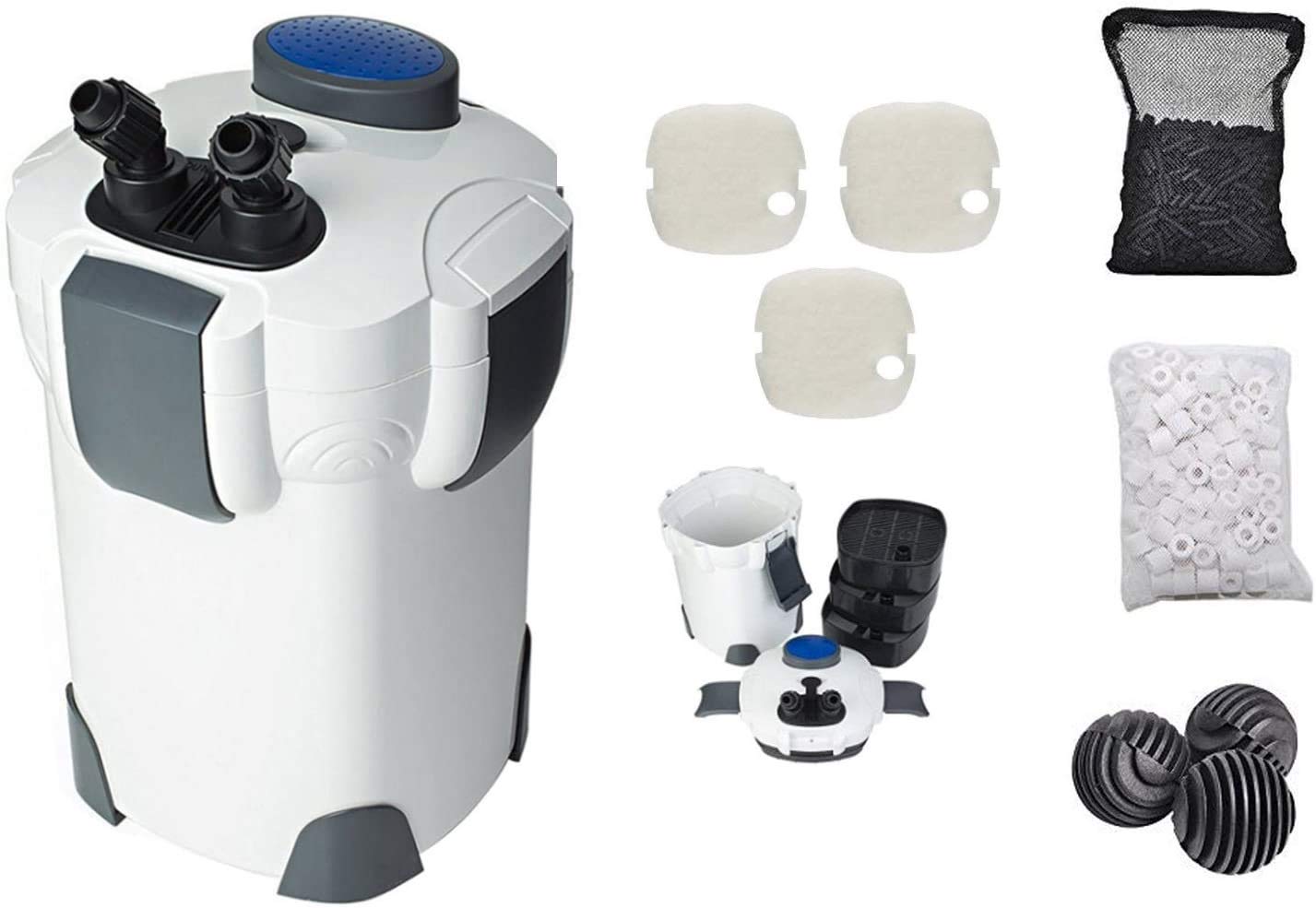
The second reason matters just as much: fry tanks are notoriously unstable. You are feeding heavily, multiple times a day, with crushed flake, baby brine shrimp, and microworms that decay fast. Ammonia and nitrite swings happen quickly. A pre-filter sponge dramatically expands the biological surface area sitting directly in the flow path, acting as a buffer between heavy feeding and the canister's slower-to-react media trays. On a 2213, this often makes the difference between a clean grow out and a stunted batch.
Pore density (PPI) — what actually works for fry
PPI stands for pores per inch, and it is the single most important spec when sizing a pre-filter sponge for a fry tank. Manufacturers describe foam in ranges, and each range has a job:
- 10 PPI (very coarse) — Used for koi ponds and trickle filters. Far too open for fry; small fry can swim straight through it. Avoid for grow out.
- 20 PPI (coarse) — A safe minimum for fry that are at least one week post-free-swim. Excellent flow, easy to rinse, will not clog quickly.
- 30 PPI (medium-coarse) — The sweet spot for most grow out tanks. Blocks newly free-swimming fry of nearly every common species, traps debris before it reaches the canister, and still rinses clean in tank water in under a minute.
- 45 PPI (medium-fine) — Use only for very small fry such as freshly free-swimming dwarf cichlids, betta, or rainbowfish. Clogs quickly under heavy feeding and will starve the 2213 of flow within days if you are not on top of cleaning.
- 60 PPI and above — Polishing foam. Never use on the intake of a fry tank; it will block within hours of a brine shrimp feeding.
For a mixed grow out, a single 30 PPI sleeve handles the widest range of species and feeding schedules. If you are raising particularly tiny fry — wild-type apistogramma, sparkling gourami, chili rasbora — a two-stage approach works better: a 30 PPI sponge as the primary sleeve with a thin 45 PPI cap on the bottom inch to catch the smallest bodies during their first week.
Fitment on the Eheim Classic 2213 intake
The 2213 uses 12/16mm tubing, which means the intake strainer outer diameter is approximately 20 to 22mm depending on whether you measure the smooth shaft or the wider basket head. Pre-filter sponges intended for canisters typically advertise an inner bore of 12mm, 16mm, or 20mm. None of those grip a 2213 intake basket properly out of the bag — and that is actually what you want.
A sponge with a 12mm or 16mm bore is meant to be forced over a tube, expanding the foam outward to grip tightly. For a 2213 fry tank, choose a sponge sold as fitting Eheim 12/16mm hose or one with a 14 to 16mm bore. The stretch creates a vacuum seal that fry cannot work past, and it will not slip up the strainer when you bump it during a water change. If the bore is too large, fry can sneak between sponge and strainer. If it is too small, you risk tearing the foam while pulling it on.
A common workaround is to wet the strainer and the inside of the sponge before sliding it on. Never use soap, oil, or any lubricant on aquarium foam, even "food-safe" silicone — residue can persist for weeks and is dangerous to fry. Tank water is enough.
Sponge length and surface area
Most aftermarket Eheim pre-filter sponges are sold in 4, 6, or 8 inch lengths. For a fry grow out 2213, longer is almost always better:
- 4 inch — Acceptable on a sparsely stocked nano grow out. Clogs quickly and does not lower intake velocity enough for very weak swimmers.
- 6 inch — The most common pick. Good biological surface area, reasonable cleaning interval of 5 to 7 days at heavy feeding.
- 8 inch or two stacked sleeves — Best for heavy fry loads. The longer the sleeve, the slower the water moves through any given square inch of foam, which means weaker swimmers are not pinned. Two stacked 4-inch sleeves are easier to clean than one continuous 8-inch piece because you can rotate them — wash one fully and leave the other to preserve bacteria.
Position the sponge so it sits about half an inch above the substrate. Too low and it will pull in substrate detritus; too high and small fry can hide under it and get trapped. If you use a sand substrate, raise it a full inch.
Biological backup — the underrated benefit
A mature pre-filter sponge on a fry tank can carry a meaningful portion of the bioload on its own. This matters because fry tanks are fed far more frequently than display tanks, and the 2213's biological media (typically Eheim Substrat Pro or ceramic noodles) responds slowly to feeding spikes. The sponge sits directly in the flow path, gets oxygen-rich water continuously, and develops a thick biofilm within two to three weeks.
For more on balancing biological and mechanical filtration in canisters, our guide to aquarium filtration systems walks through how to stage media inside the 2213 to complement a pre-filter, and our best aquarium filtration tips covers why turnover rate matters more than total filter volume for fry survival.
Cleaning cadence for fry grow out
The mistake most fry keepers make is treating the pre-filter sponge like display tank media. On a heavily fed grow out tank, you should expect to rinse the sponge in dirty tank water every 5 to 7 days, sometimes every 3 to 4 days during the heaviest feeding period. Signs that it is overdue:
- Reduced output from the 2213 spray bar — flow has slowed because the sponge is choking the intake
- Visible white biofilm or mulm clinging to the outside of the sponge in clumps rather than evenly
- Fry congregating near the intake instead of foraging across the tank
Rinse only in water you have already siphoned from the tank into a bucket. Squeeze firmly three or four times until water runs clear-ish — not perfectly clean. The dark color is the bacterial colony you want to preserve. Never use tap water; chlorine and chloramine will kill the biofilm and you will see a nitrite spike within 24 hours. For more on stability during these spikes, see our aquarium water care guide.
Common mistakes to avoid
Three errors crop up over and over with first-time fry breeders running a 2213:
- Using a polishing pad instead of a pre-filter sponge. Floss and fine pads belong inside the canister, not on the intake. They clog within hours of heavy feeding and can starve the impeller, which on a 2213 leads to airlock and a stalled filter.
- Removing the strainer basket. Some keepers slide the sponge directly onto the bare intake tube to get more contact area. This works, but you lose the basket's secondary defense if the sponge slips off during a water change. Keep the basket on.
- Letting the sponge stay on too long without cleaning. A sponge so clogged it has stopped passing flow is no longer a biological filter — it is a wet anaerobic mass. When you finally rinse it, you can dump a large slug of accumulated waste into the tank. Stay on schedule.
If you are weighing whether the 2213 is even the right canister for your grow out volume, our canister filter comparison covers how the 2213 compares to step-up models in turnover and serviceability.
Frequently Asked Questions
What pore size pre-filter sponge is safe for one-week-old guppy fry on an Eheim 2213?
A 30 PPI medium-coarse sponge is the standard pick for one-week-old guppy fry. Guppies are relatively robust at that age and will not be pulled through a properly fitted 30 PPI foam. If you are running an extra-deep sponge of 6 inches or more, you can step up to 20 PPI without losing safety, which buys you longer cleaning intervals.
How do I keep the pre-filter sponge from sliding up the 2213 intake during water changes?
Choose a sponge with a bore that stretches firmly over the strainer — 14 to 16mm inner diameter for a 2213 basket. If yours still creeps, wrap a single turn of aquarium-safe black silicone band or a thin slice cut from another sponge around the top of the strainer to act as a stop. Avoid zip ties on plastic strainers because they can score the surface and create a leak point under the head pressure of the canister.
Should I run the pre-filter sponge directly on the intake tube or keep the Eheim basket?
Keep the basket. The factory strainer provides a redundant barrier if the sponge slips off, and it gives the sponge a textured surface to grip. The only time it makes sense to remove the basket is if you are running a much wider sponge as a bulk biological add-on and the basket prevents proper seating, which is rarely the case on a fry tank.
How often should I replace the pre-filter sponge on a fry grow out 2213?
If you rinse weekly in tank water, a quality open-cell sponge lasts 12 to 24 months before it loses structural integrity. Replace it when the foam tears at the bore, becomes mushy when squeezed, or no longer rebounds to its original shape. Always overlap a new sponge with the old one for one to two weeks to seed the replacement before pulling the original.
Will a pre-filter sponge reduce the Eheim 2213's flow too much for a planted grow out?
A clean 30 PPI sponge of 6 inches reduces flow by roughly 10 to 15 percent — barely noticeable. A clogged sponge can cut flow by 50 percent or more, which is when plants downstream of the spray bar begin to suffer. Stay on a 5 to 7 day cleaning schedule and the flow loss is negligible. If you want to compensate, point the spray bar slightly downward to drive more circulation through the lower water column where fry feed.
Can I use a sponge filter instead of a pre-filter sponge on the 2213 intake?
Yes — many fry keepers run a separate air-driven sponge filter alongside the 2213 for added biological capacity and gentle flow. This does not eliminate the need for a pre-filter sponge on the 2213 intake, though, since the canister will still pull fry in. The two tools solve different problems: the air sponge adds biological surface area at very low flow; the intake sponge protects fry from the canister.
Do I need to cycle the pre-filter sponge separately before adding fry?
Not separately, but you should install it at least two weeks before fry arrive so it begins colonizing alongside your existing media. The fastest way to mature a new sponge is to drop it inside the canister itself for a week before moving it to the intake, or seed it with media from an established filter. A bare new sponge offers physical fry protection from day one but very little biological buffering until biofilm develops.