As an Amazon Associate this site earns from qualifying purchases.
The best aquarium heater for unheated basement fish room winter conditions is not a single product — it is a sizing and redundancy strategy built around how cold your room actually gets. In a basement that drifts into the 50s°F (or lower) overnight, a standard 100-watt heater rated for a 30-gallon tank will run nonstop and still lose the battle. To keep tropical fish healthy from December through March, you need a heater (or pair of heaters) sized for the temperature delta between your room and your target tank temperature, mounted with a backup controller, and chosen for reliability over flashy features.
This guide walks through how to calculate wattage for a cold room, why redundancy matters more than brand loyalty, what heater technologies survive a basement environment, and how to think about energy cost. By the end, you should know exactly which size and configuration to shop for when you click through to Amazon.
Why a basement fish room needs a different heater strategy
Most heater wattage charts on the back of a box assume your tank lives in a heated home — say, 68–72°F ambient. Those charts typically suggest 3–5 watts per gallon to maintain an 8–10°F rise. In an unheated basement that sits at 55°F (and dips to 48°F during a cold snap), you may need to lift the water 22–30°F above ambient. That changes everything.
Heat loss from a glass aquarium is roughly proportional to the surface area exposed to colder air and the temperature differential. Double the temperature gap and you roughly double the wattage required to hold setpoint. This is why the best aquarium heater for unheated basement fish room winter use is almost always more powerful — and ideally split across two units — than what a beginner chart recommends.
The 10-watts-per-gallon rule for cold rooms
A practical field-tested rule for basement fish rooms is 8–10 watts per gallon when ambient stays below 60°F, versus the 3–5 watts per gallon used in heated living spaces. A 40-gallon tank that needs 150 watts upstairs may need 300–400 watts downstairs. Going under-spec means the heater runs at 100% duty cycle, which shortens its life and leaves zero headroom for power flickers, door drafts, or polar-vortex weeks.
Why two heaters beat one bigger heater
If a single 300-watt heater fails stuck-ON, your tank cooks. Fails stuck-OFF, and overnight your fish chill to room temperature. Two 200-watt heaters set to the same temperature give you two layers of protection: if one sticks ON, the other shuts off and the tank only overheats slowly; if one fails OFF, the other can still keep the tank within a few degrees of setpoint until you notice. For a cold basement, dual heaters are not luxury — they are insurance.

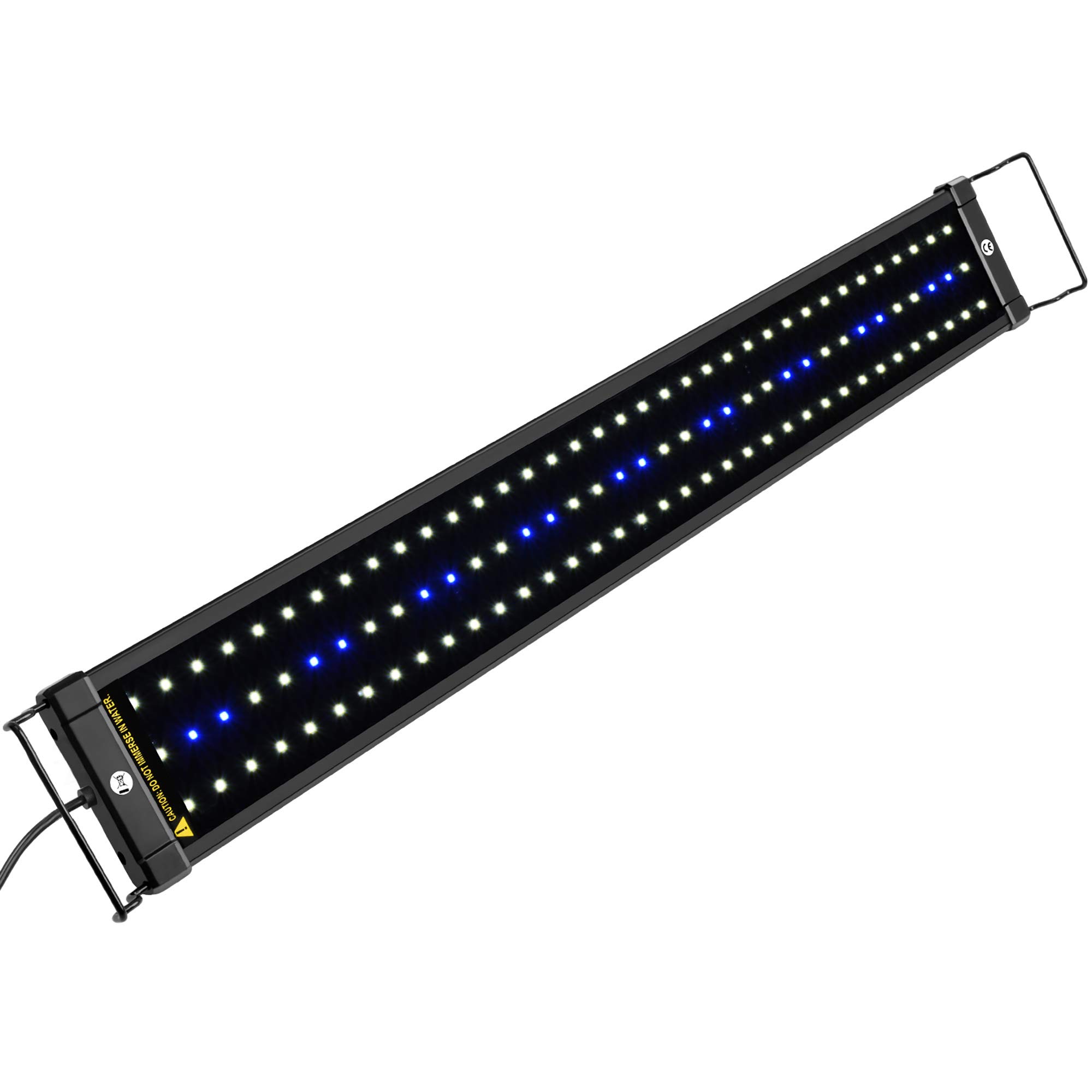
- [Premium 5050 & RGB LED Bulbs] hygger 978 Aquarium led Light features a super-bright 6500K white LEDs paired with the full-spectrum RGB LEDs to emit bright light to bring out the
- [24/7 Mode] This 24/7 fish tank light replicates the natural living conditions, starting with warm orange light at sunrise to 0bright full spectrum light at noon and starry blue
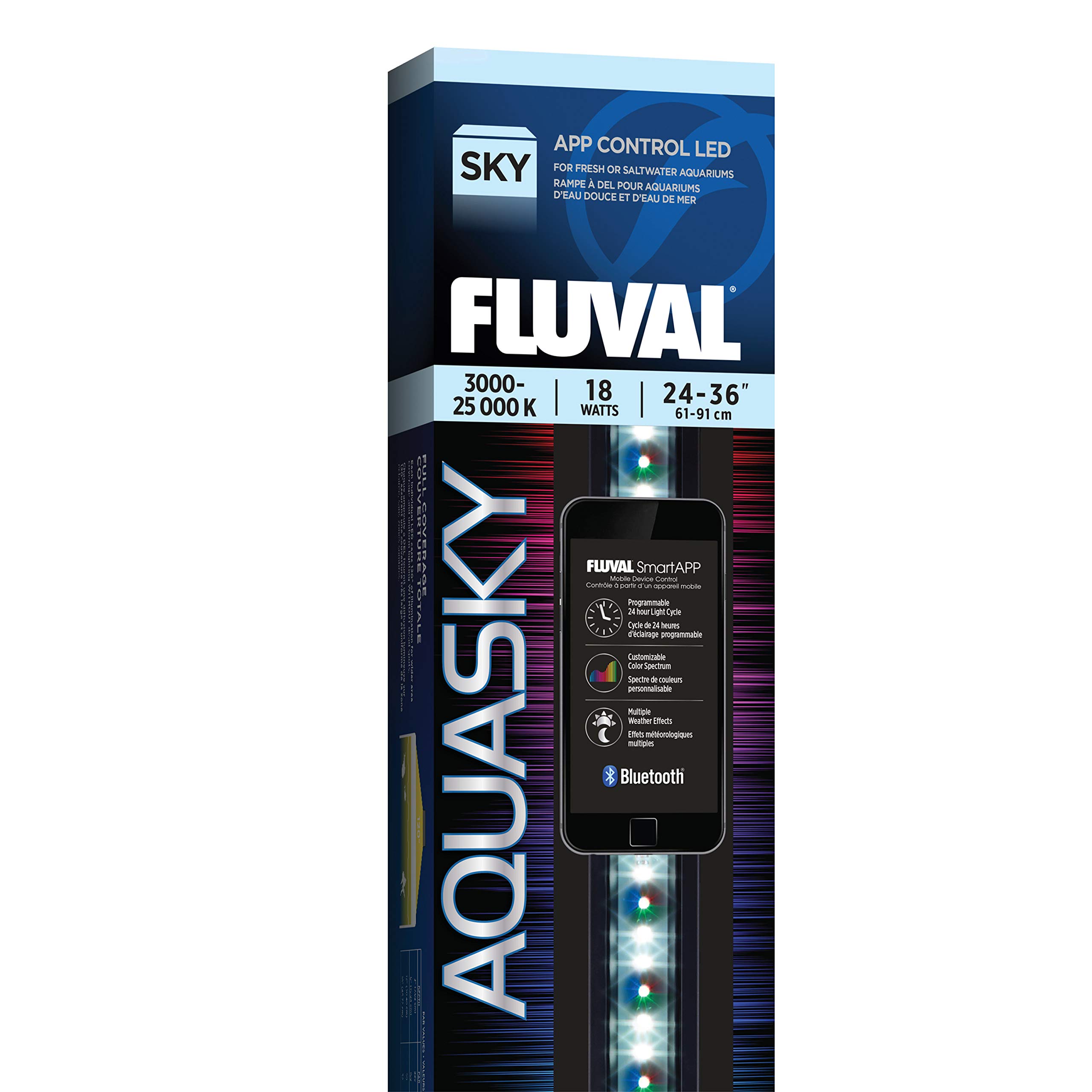
- Fully Customizable RGB + White Spectrum: The Fluval Aquasky 2.0 (18W) delivers vibrant, customizable lighting through RGB LEDs plus 6500K white LEDs. Create infinite color
- Bluetooth Control with FluvalSmart App: Easily program your light via the FluvalSmart App, which gives you total control over brightness, color, and timing. Adjust your 24-hour
How to size the best aquarium heater for unheated basement fish room winter conditions
Here is the practical sizing workflow I use when helping hobbyists plan a basement build:
- Measure your coldest realistic ambient. Put a min/max thermometer in the basement for a week in January. Use the lowest reading, not the average.
- Pick your target tank temperature. Most community tropicals want 76–78°F. Discus or wild bettas may want 82°F. Coldwater species (goldfish, white clouds) may need no heater if the basement stays above 60°F.
- Calculate the delta. Target minus ambient. Example: 78°F target − 50°F coldest ambient = 28°F delta.
- Apply a wattage multiplier. For deltas of 20–30°F, plan on roughly 8–10 watts per gallon. For deltas above 30°F, plan on 12+ watts per gallon and seriously consider insulating the tank.
- Split across two heaters. Round up, divide by two, and pick standard wattages (e.g., two 150W or two 200W).
For deeper background on matching wattage to tank volume and species in general (not cold-room-specific), our aquarium heater guidance article walks through the standard living-room math. Use that as a baseline, then apply the cold-room multiplier above.
Heater technology choices for a cold, damp basement
Basements add two stressors that living-room tanks rarely face: condensation on the outside of the tank, and the heater spending much more time submerged at 100% output. Both push you toward more durable construction.
Glass submersible heaters
The classic choice. Affordable, widely available, and accurate when paired with a thermostat. The downside in a basement is fragility — repeated thermal cycling at high duty stresses the glass envelope, and a cold tap-water water change against a glowing-hot glass tube has cracked many a heater. If you go this route, always unplug 15 minutes before water changes and let the glass cool.
Titanium heaters with external controllers
For serious basement fish rooms, a titanium heating element driven by an external Inkbird-style controller is the gold standard. The element itself can be virtually indestructible, and the controller acts as the brain — meaning the heater's internal thermostat is irrelevant. If the controller fails, you swap a $35 box, not a $90 heater. This setup also lets you run two heaters off one controller with a single, accurate probe, eliminating the "two heaters fighting each other" problem.
Shatterproof composite heaters
Newer plastic-shelled heaters (Fluval E-series, Eheim Jager-style replacements) split the difference: more durable than glass, cheaper than titanium, and usually with a built-in LCD or LED indicator that makes it easy to spot a stuck unit during your morning fish-room walk.
The external controller question
If you are running more than two or three tanks in a basement, individual heater thermostats become a maintenance headache. An external digital controller (Inkbird ITC-308 is the canonical pick, though many alternatives exist) gives you:
- A calibratable probe you can verify against a reference thermometer
- High and low temperature alarms — critical when ambient can swing 15°F in a day
- The ability to run a "dumb" heater whose internal thermostat is locked at maximum, with all control logic outside the tank
- Centralized setpoint adjustment when you want to bump a quarantine tank up for treatment
For a multi-tank basement room, budgeting one controller per tank (or per pair of tanks on a shared sump) is one of the highest-leverage choices you can make.
Insulation: the free wattage upgrade
Before you size up another 100 watts of heater, consider that 1-inch foam insulation board (the pink or blue rigid stuff from any hardware store) cut to fit the back and sides of a tank can cut heat loss by 30–50%. A few practical tips:
- Insulate the back, sides, and bottom — you only need the front clear for viewing.
- Use reflective foil tape on the basement-facing surfaces to bounce radiated heat back.
- Cover the top with glass canopies or polycarbonate sheet to stop evaporative cooling, which is the single biggest heat loss path in any aquarium.
- Insulate the stand cabinet if you have a sump — sumps lose a surprising amount of heat through thin plywood doors.
A well-insulated 75-gallon in a 52°F basement can often hold 78°F on 300 watts. The same tank uninsulated may need 500 watts. The math on insulation pays back in a single winter.
Power and safety considerations
A multi-tank basement room can pull serious current. Five 200-watt heaters plus pumps, lights, and a dehumidifier add up fast. Two practical safety items:
- GFCI everything. Basements are damp; aquariums splash. Every outlet feeding the fish room should be GFCI-protected, and ideally split across two breakers so a single trip does not kill every heater at once.
- Dehumidify, do not just ventilate. Open tanks in a cold basement create condensation that drips onto outlets and rusts hardware. A standalone dehumidifier set to 55% RH pays for itself in equipment longevity.
Putting it all together: a sample basement configuration
For a 75-gallon community tank in a basement that gets down to 50°F:
- Target: 78°F
- Delta: 28°F
- Wattage needed: 75 gallons × 9 watts/gallon ≈ 675 watts (round to 700)
- Configuration: two 300W titanium heaters with internal thermostats maxed out, driven by a single external controller with a calibrated probe
- Backup: one 200W glass submersible with its own internal thermostat set to 74°F as a "second line" that only kicks in if the primaries fail and tank drops
- Insulation: 1" foam on back/sides/bottom, glass canopy on top
For a smaller 20-gallon quarantine tank in the same room, two 100W heaters on a shared controller, with foam insulation, are plenty. For comprehensive guidance on broader heater selection beyond cold-room scenarios, see our top aquarium heaters of 2026 roundup, and for a head-to-head on two popular brands often used in fish rooms, our Aqueon vs Marina heater comparison.
Maintenance routines for cold-room heaters
Heaters working at 60–80% duty cycle all winter will fail eventually. Build these checks into your weekly routine:
- Glance at every controller display during your morning feed — note any tank reading more than 1°F off setpoint.
- Once a month, calibrate every controller probe against a reference thermometer (an inexpensive lab-grade glass thermometer is fine).
- Once a season, unplug and inspect each heater for cracks, mineral buildup, or discolored elements.
- Keep one spare heater of each wattage on a shelf. A dead heater on a Friday night during a January cold snap is not the time to wait for shipping.
Holistic water quality matters even more when heaters are working hard, because warmer water holds less dissolved oxygen. Our aquarium water care guide covers the surface-agitation and oxygenation steps that pair well with a high-wattage heater setup.
Frequently Asked Questions
What size aquarium heater do I need for a 55-gallon tank in a 50°F basement?
For a 28°F delta (78°F target minus 50°F ambient), plan on roughly 8–10 watts per gallon, or 450–550 total watts. Split that across two 250W or 300W heaters on an external controller. Add 1-inch foam insulation to the back and sides and you may get away with two 200W units, but always size for the worst night of the year, not the average.
Can I use a regular 100-watt heater in a cold basement if I add a controller?
A controller helps with accuracy and safety but does not add wattage. If your tank physically needs 400 watts to hold setpoint against a 30°F delta, a 100-watt heater on a perfect controller will still run at 100% duty cycle and still lose ground. Size the wattage for the heat load first; add the controller on top for control quality.
Should I heat the basement room itself instead of every tank?
For four or more tanks, yes — a small space heater or oil-filled radiator holding the room at 65°F often costs less in electricity than running ten oversized aquarium heaters at 70%+ duty cycle. The aquarium heaters then only need to lift water from 65°F to 78°F (a 13°F delta), which is standard living-room territory. Insulate the room first; uninsulated basement walls will eat your space-heater output.
Are titanium heaters worth the extra cost for a winter fish room?
For a basement room running heaters hard for four to five months a year, yes. The shatterproof element, longer service life under high duty, and ability to be driven by an external controller make titanium plus controller the most reliable long-term configuration. For a single tank in a heated living room, glass is fine.
How do I keep my tank warm during a winter power outage?
Wrap the tank in blankets or towels (insulation works both directions), cover the top to stop evaporation, and use chemical hand warmers or sealed bottles of hot water floated inside the tank for short outages. A battery-powered air pump keeps oxygen up. For longer outages, a small inverter generator running just the heaters and a pump can save a fish room — plan this before you need it.
Will my heater shatter if cold tap water hits it during a water change?
Glass heaters can crack from thermal shock if they are hot and suddenly exposed to cold air or cold water. Always unplug heaters 15–20 minutes before draining and refilling, and let the glass come down to water temperature before refilling with warm water. Titanium and most composite-shell heaters are far more forgiving but still benefit from the same routine.
Do I really need two heaters per tank, or is one enough?
One heater is acceptable in a heated home where a failure means a slow drift to 68°F. In a cold basement, a failed-off heater can drop a tank to 50°F overnight — fatal to most tropicals. Two heaters at half the needed wattage each, ideally on an external controller, is the single biggest reliability upgrade you can make in a winter fish room.